Welcome to Yorkshire
Published on August 6th, 2026
•Rising quietly above Carlton in Coverdale in the heart of the Yorkshire Dales National Park, the small earthwork also known as Round Hill, or Carlton Castle, is easy to overlook. Yet beneath its grass-covered slopes lies a story that reaches back into the turbulent years after the Norman Conquest.
After 1066, the new Norman rulers rapidly established castles across the country. These early fortifications were often built as motte-and-baileys: a raised mound, or motte, carrying a timber tower, with a defended enclosure beside it. Their purpose was not simply to provide a home for a lord. They were instruments of power, designed to watch routes, protect territory and demonstrate that a new ruling class was firmly in control.
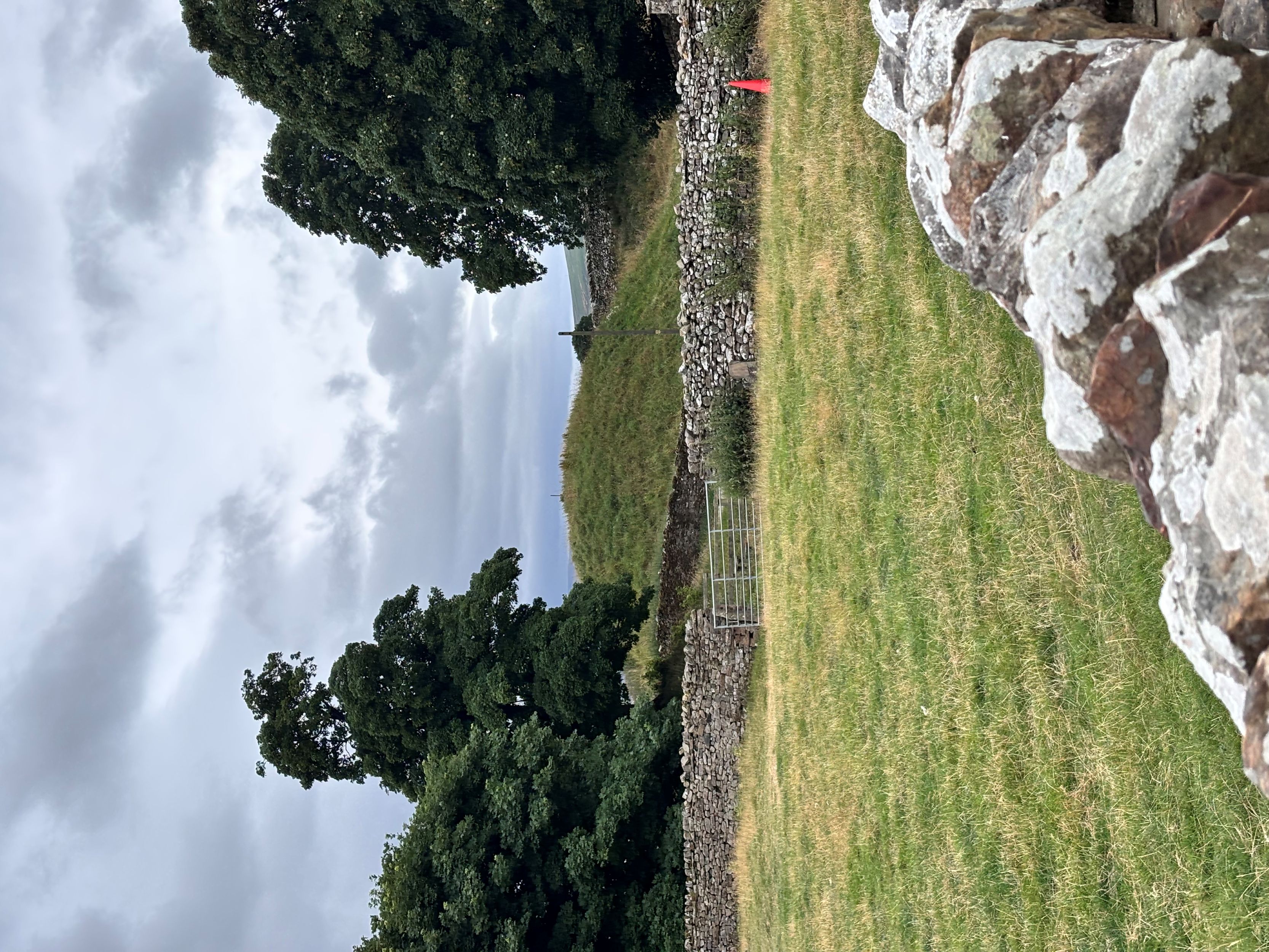
Carlton was already an established settlement by the time of the Domesday survey in 1086. The village’s name reflects its earlier Anglo-Scandinavian roots, while the surrounding landscape soon became part of the network of Norman-controlled estates centred on Middleham. It was probably in the late 11th or 12th century that the mound was thus constructed, although its precise date and purpose remain uncertain. The surviving motte is relatively small, featuring an earthen mound about 32 metres across and nearly four metres high, surrounded by a ditch (from which the earth was used to construct it). It appears more likely that the motte was built in isolation, as it is probably too high to surmount a fortification, not to mention its top is rounded.
One convincing interpretation is that the mound formed a small Norman outpost connected with William’s Hill, the earlier fortification at Middleham. From such a position, a timber tower could have helped control movement through Coverdale and towards the routes crossing into Wharfedale. But the story is not certain. Some archaeologists have suggested that Round Hill may instead be a prehistoric burial mound or barrow, but without excavation its origins cannot be proved.
Today, only earth and grass remain, but it still causes many to ponder as they sit and drink their pints in the Forrester’s Arms public house just in front of this curious embankment.
Books by Dr Emma Wells #ad