
Welcome to Yorkshire
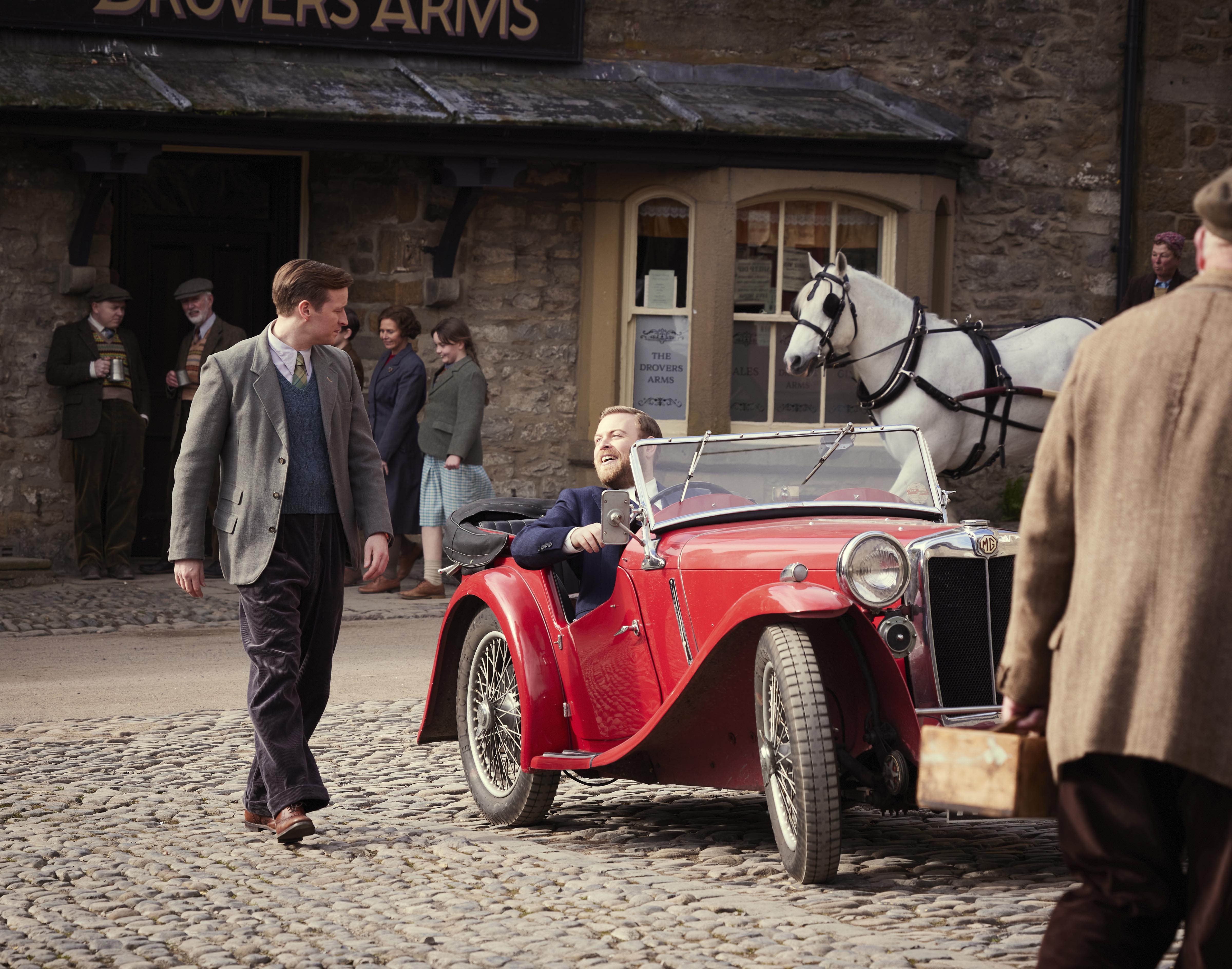
All Creatures Great and Small is back on television tonight, transporting viewers once again to the Yorkshire Dales – this time in 1946.
The opening episode of Series 7 explores the animals, landscapes and familiar characters, and there were a few details that make it possible to recreate a little of Darrowby life for yourself. Such as finding your very own classic sporty little number, an MG SA, to drive around the Yorkshire Dales.
So, where can you find an old-fashioned sweet shop like the one visited by James and Helen? Where can you buy a proper Yorkshire wool jumper? And, perhaps most importantly, where can you have a long soak in a roll-top bath like Tristan?
Where can I find an old-fashioned sweet shop like the one in All Creatures Great and Small?
The first episode sees James, Helen and their children visit Darrowby's local sweet shop, where confectioner Geoff Hatfield also has a veterinary problem for James to investigate.
Fortunately, Yorkshire still has plenty of places where rows of jars, boiled sweets and paper bags can provide something close to the traditional sweet-shop experience.
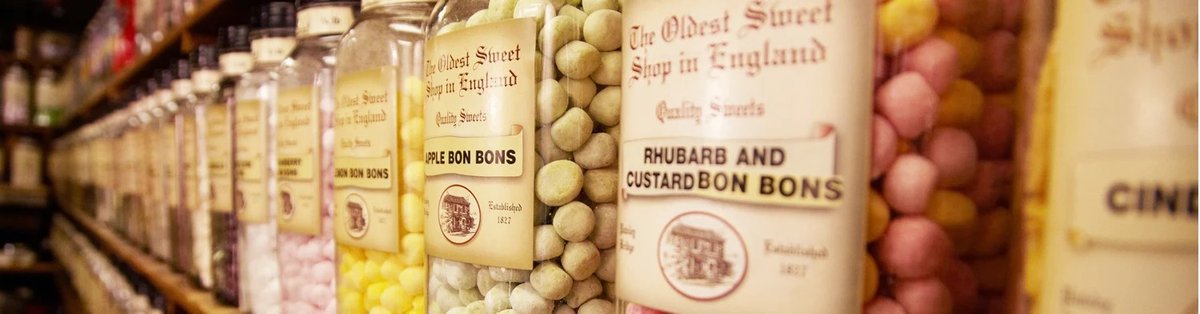
One of the most obvious places to start is The Oldest Sweet Shop in the World in Pateley Bridge. Trading since 1827, the shop occupies a building dating from the 1600s and still has rows of glass jars filled with traditional sweets, weighed using old-fashioned scales.
In Wensleydale, The Old Sweet Shop in Hawes is another appropriately nostalgic stop. Located in the Market Place, it sells around 200 varieties of traditional sweets by weight from jars, including sherbet lemons, Pontefract cakes and midget gems.
York is another natural destination for anyone with a sweet tooth. The city's long association with confectionery is well known, while the historic Shambles provides an appropriately old-world setting for traditional sweet and chocolate shops.
Another option is The Traditional Sweet Shop in Otley, where around 300 jars line the walls from floor to ceiling. Its selection includes old favourites such as sherbet pips, sweet peanuts and traditional fudge.
Where can I get a jumper like the ones in All Creatures Great and Small?
The knitwear in All Creatures Great and Small looks perfectly at home against the dry-stone walls and green hills of the Yorkshire Dales.
For the genuine article, there are still businesses making woollen clothing in Yorkshire and using wool with strong connections to the Dales.
Yorkshire Wild Wool produces naturally dyed yarn using British wool including Wensleydale, Bluefaced Leicester and Masham. Its yarn can be found at outlets including the Chapel Gallery in Hawes and Distinctly Dales in Reeth.
For knitters wanting to start from the wool itself, Glencroft's Clapdale Wool is another very local option. Its wool comes from seven farms within ten miles of the company's Yorkshire Dales base at Clapham and is processed within 50 miles of the sheep.
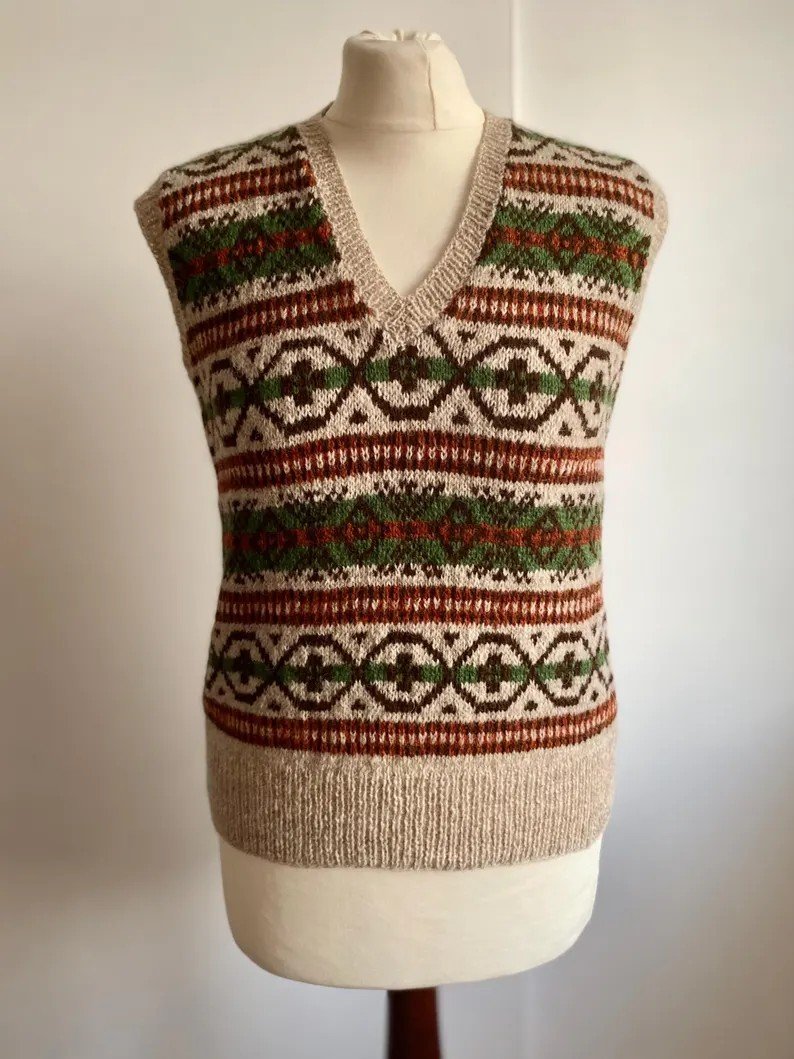
For viewers particularly taken with the programme’s 1940s knitwear, there are also plenty of 1940s-inspired sweaters and vintage knitting patterns available on Etsy, including Fair Isle, cable-knit, striped and classic wartime-style jumpers – ideal for recreating the Darrowby look using Yorkshire wool.
So rather than simply finding a jumper that looks as though it belongs in Darrowby, it is possible to wear – or knit – something with a genuine connection to the sheep, farms and wool industry of Yorkshire.
Have a soak like Tristan: Yorkshire Dales stays with roll-top baths
There is another appealing bit of period luxury in the new series: the roll-top bath.
If watching Tristan enjoying a soak leaves viewers wanting to do exactly the same, there are some suitably atmospheric places to stay around the Yorkshire Dales.
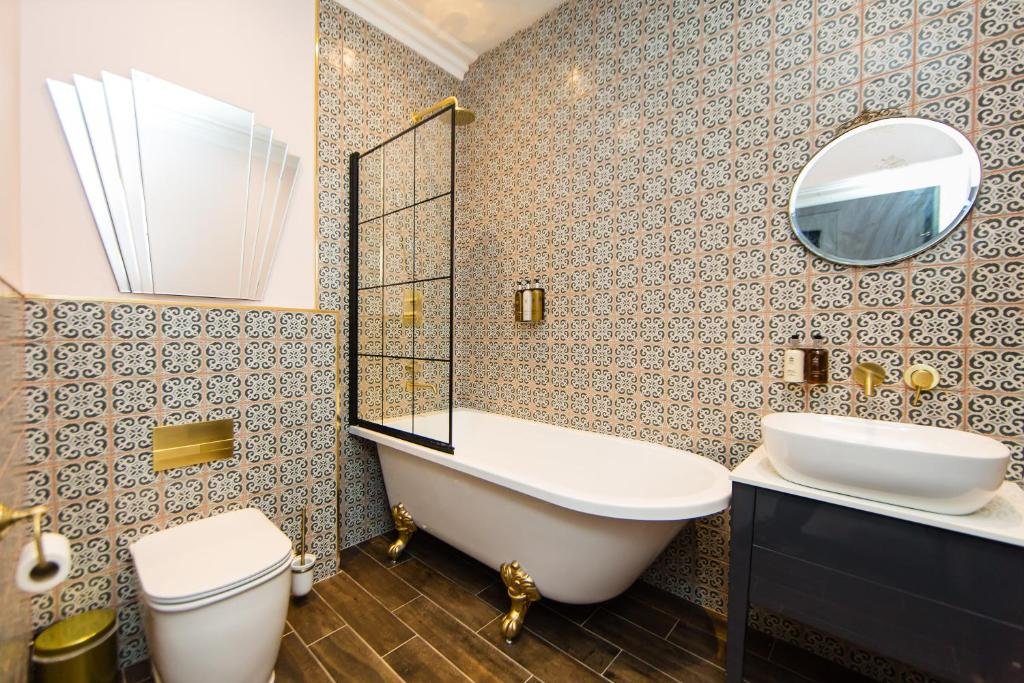
For the ultimate All Creatures Great and Small soak, stay at Skeldale House in Askrigg, the Grade II-listed building that starred as the veterinary surgery in the original TV series, where the character-themed accommodation includes elegant roll-top baths – with the Tricky Woo Suite even featuring a freestanding bath in the bedroom.
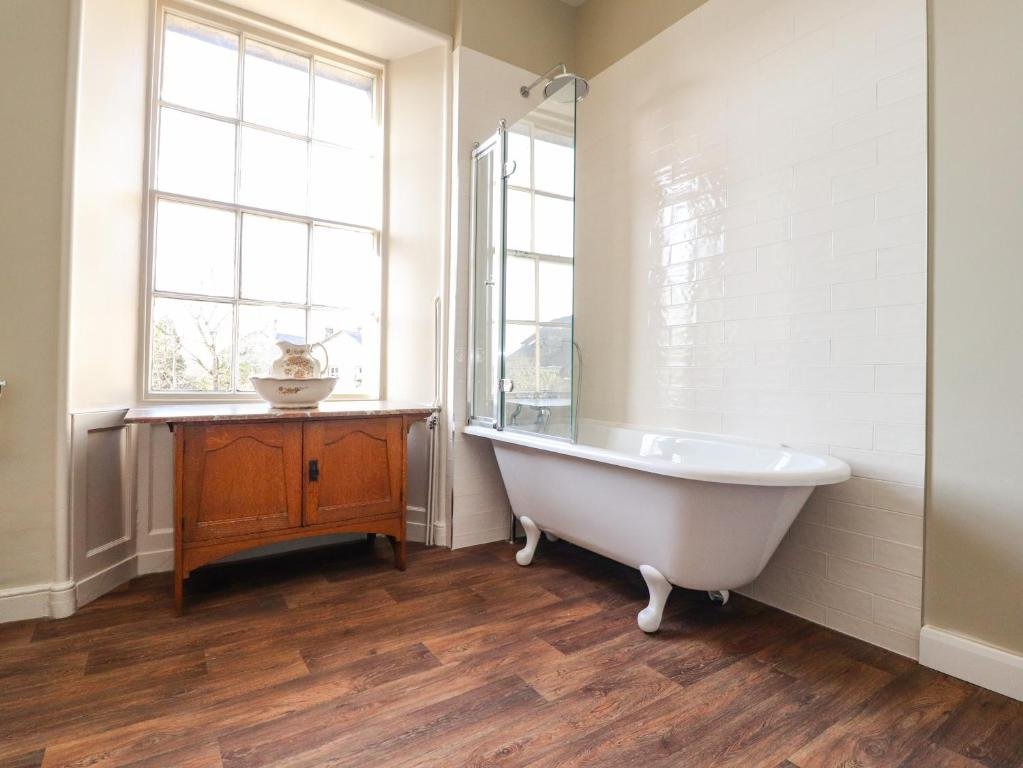
Windyridge in Settle is a four-bedroom property with open fires and a bathroom featuring a roll-top bath – a tempting combination after a long day exploring the Dales.
For something particularly indulgent, Yorebridge House near Leyburn sits in Wensleydale with views across the surrounding countryside. Among its individually designed rooms is Pienza, where the roll-top bath actually sits in the bedroom.
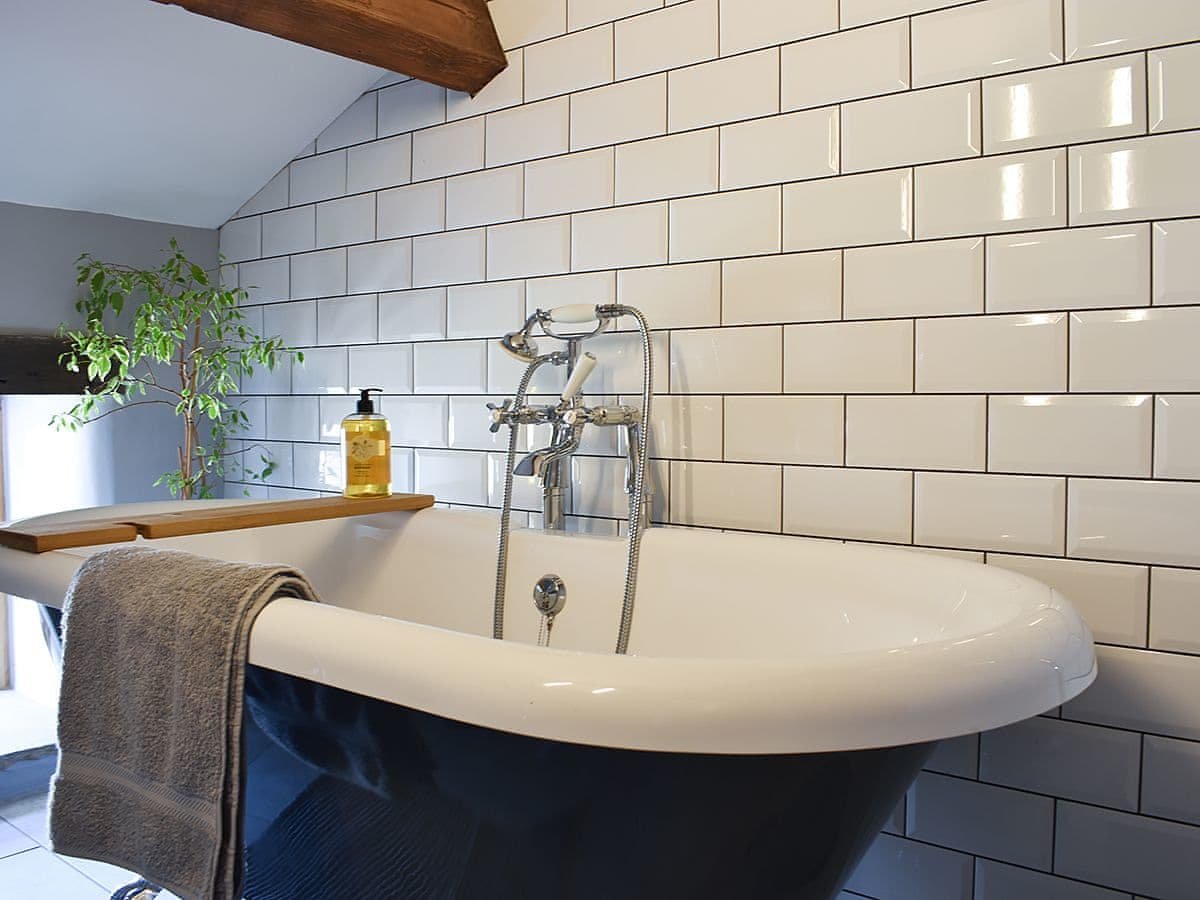
And near Hawes, Gallivantin Cottage at Thornton Rust combines a traditional open fire with an en-suite roll-top bath, making it another suitably cosy base for an autumn escape.
From Shorthorns to Friesians: the changing cows of the Yorkshire Dales
There is another detail in All Creatures Great and Small that tells a much bigger story about the real Yorkshire Dales: the dairy cows.
In the 1940s, when the new series is set, the Northern Dairy Shorthorn was still an important part of farming life in Wensleydale. These hardy cattle, sometimes known as Dales Shorthorns, were traditionally valued for both milk and beef and were particularly well suited to farming in northern England.
But change was coming.
The Yorkshire Dales National Park Authority has documented how the Northern Dairy Shorthorn remained the premier milking cow in Wensleydale until the 1960s, when farmers increasingly turned to black-and-white Friesians because of their greater milk-producing capabilities.
The "A farmer and his dairy cows" feature follows that transition through photographs of the Hopper family, who farmed at Yorescott near Bainbridge.
Pictures from the 1920s show farmer Joseph Hopper with his Northern Dairy Shorthorns. Later photographs show his son Redvers with the same breed, but by the end of Redvers' farming career in the 1960s, a photograph captures him proudly displaying a Friesian calf. When the farm was sold on his retirement in 1965, the herd still contained both Dairy Shorthorns and Friesians – a snapshot of the transition taking place across the Dales.
Other oral histories collected by the National Park Authority tell a similar story. William Lambert of Raygill House Farm near Hawes recalled his father bringing Shorthorns to the farm in 1961 before crossing them with Friesians, which were regarded as a more productive breed. Over successive generations, the herd gradually became predominantly black and white, although occasional red and blue-roan animals continued to reveal their Shorthorn ancestry.
Farmer William Porter similarly remembered Wensleydale dairy farms beginning with Northern Dairy Shorthorns before moving towards British Friesians.
That makes the 1946 setting of All Creatures Great and Small particularly interesting. Viewers are seeing the Dales at a point when the traditional Shorthorn was still very much part of the landscape, but the agricultural changes that would transform local dairy herds over the following decades were beginning to emerge.
The Northern Dairy Shorthorn has not disappeared entirely. The breed survives today, and its history provides a living connection between the farming landscape portrayed in All Creatures Great and Small and the modern Yorkshire Dales.
Step into the Yorkshire of All Creatures Great and Small
Part of the enduring appeal of All Creatures Great and Small is that its Yorkshire doesn't feel entirely confined to television.
The cars and veterinary equipment may have changed since 1946, but viewers can still wander into an old-fashioned sweet shop, buy wool from sheep grazing in the Dales, pull on a locally knitted jumper and end the day soaking in a roll-top bath.
Series 7 of All Creatures Great and Small begins tonight, Thursday 17 September 2026, at 9pm on Channel 5.


