Yorkshire Team
Published on February 5th, 2026
•Thinking about what to do after school can feel like a massive decision. For ages, it seemed like the only path was uni, uni, uni. But what if that’s not the only way to a brilliant, well-paid career? New research released on 04 February 2026 suggests that picking up a trade isn’t just a solid plan B; it’s a top-tier choice that could see people earning as much as, or even more than, many graduates, and all without the mountain of student debt.
A Yorkshire-based specialist, Tadweld, has been looking into the numbers, and it seems skilled trades are having a real moment in the UK.
Who's making the big money?
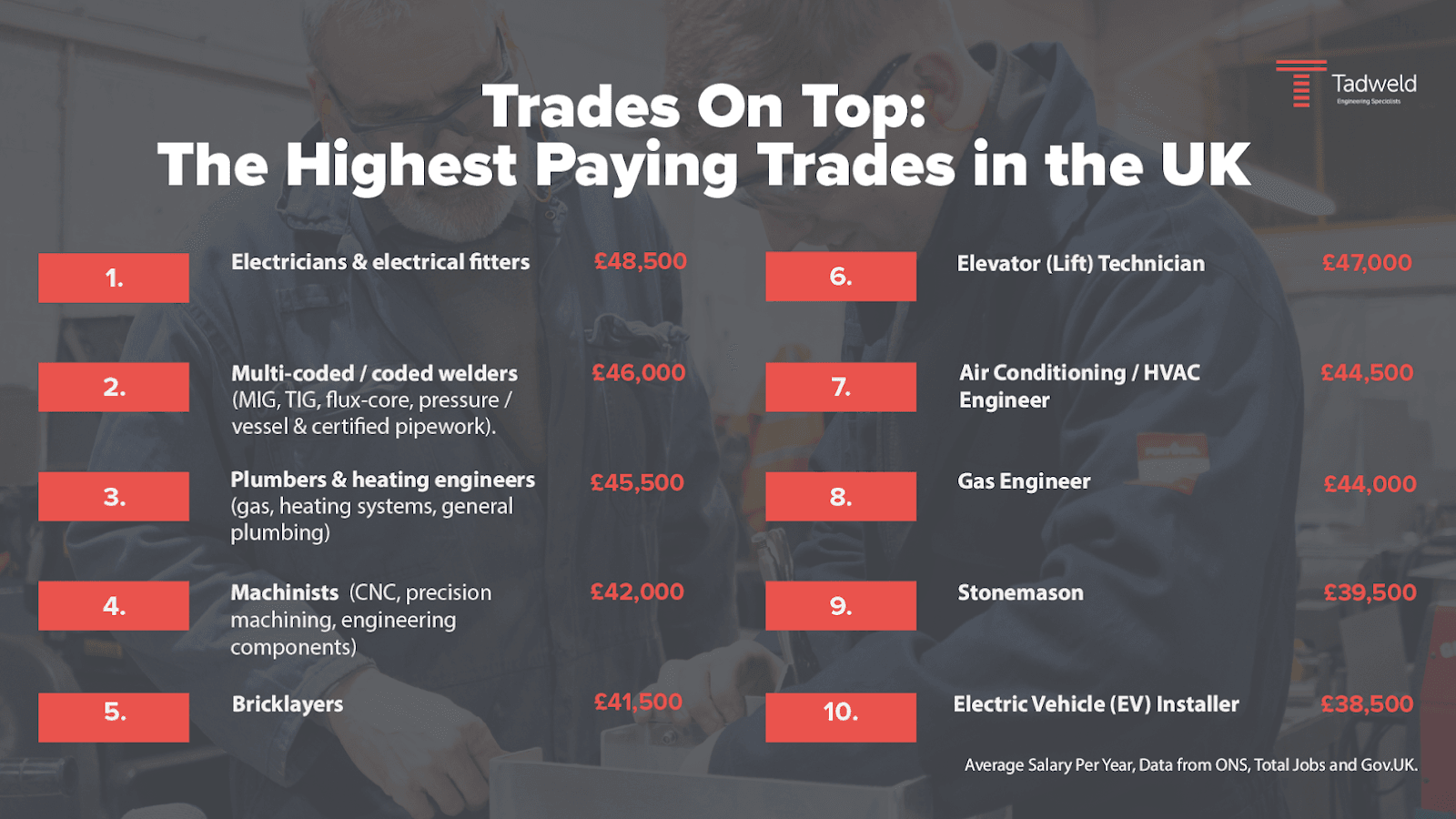
Right then, let's get to the good stuff. Who’s actually earning the most? According to new research from steelwork and welding specialist Tadweld, electricians and welders are leading the pack. After digging through loads of data from official sources like the Office for National Statistics, Gov.uk, and job sites like Total Jobs, a pretty clear picture has emerged. The average salary across the top 20 skilled trades is a very respectable £38,925. To put that into perspective, the median annual salary for a full-time employee in the UK was £39,039 in April 2025. This means that skilled tradespeople are earning right on par with the national average, which is fantastic news for anyone considering this career path, including young people and career changers.
It’s a powerful reminder that hands-on careers offer serious earning potential and long-term job security. Forget the old stereotypes; modern trades are in high demand and are essential for the country's economic growth. Whether it's in construction, manufacturing, or the booming clean energy sector, there’s a huge need for skilled workers.
The data highlights that choosing one of these trades isn’t just about getting a job; it’s about building a future-proof career with clear routes for progression. And the best bit? It’s a path open to everyone, whether you're just leaving school or you're one of the many career changers looking for a new challenge.
Why the massive demand for skilled workers?
It’s all well and good knowing the pay is decent, but are there actually jobs out there? The short answer is a big, fat yes. The demand for specialist roles is through the roof. Think about it: the UK is constantly building new houses, upgrading its infrastructure, like railways and roads, and making a massive shift towards clean energy. All of that work needs people who know what they’re doing. Electricians are needed to wire new homes and install solar panels. Welders are crucial for building everything from bridges to wind turbines. And it doesn't stop there; roles like HVAC engineers, lift technicians, and renewable-energy installers are also seeing a big surge in demand. This is why having skilled workers is so important for long-term economic growth.
The Construction Industry Training Board (CITB) has crunched the numbers and reckons the sector will need over 250,000 extra workers by 2028 just to keep up. That’s a quarter of a million jobs. This isn't a short-term trend; it's a long-term need driven by big national projects and goals. This incredible demand provides amazing job security for skilled workers. The manufacturing and construction industries are crying out for talent, meaning that once a person is qualified, they’ll have a skill that’s wanted all over the country. This provides a level of stability that many other careers just can’t match, making the trades an attractive option for both young people and career changers.
What the people in the know are saying
It’s not just the stats that tell the story. People working in the industry see it day in, day out. Chris Houston, the Managing Director of Tadweld, a company that specialises in precision steelwork and bespoke access solutions, had a lot to say about the findings. He was really pleased to see electricians and welders getting the recognition they deserve.
He said: “It’s great to see electricians and welders leading the rankings. These roles offer excellent pay, long-term security and a genuinely positive working environment where young adults can thrive, develop specialist skills and build meaningful careers.”
He also pointed out that these jobs have changed a lot over the years. They aren't just about getting your hands dirty anymore. “Modern trades are highly technical, safety-led and professional - and they play a critical role in everything from clean energy projects to national infrastructure.” This expert view reinforces that a career in the trades is a smart move, helping build the future of the UK, from its infrastructure to its clean energy goals.
The tricky bit: apprenticeships and training costs
So, how do people get into these brilliant careers? For many, the answer is apprenticeships. They are a fantastic way to get started, letting people earn a wage while they learn the skills on the job. Chris Houston from Tadweld agrees, calling them a "hugely positive pathway into the trades." However, there's a bit of a snag. It's becoming more expensive for businesses, especially smaller ones, to take on apprentices. This is a real challenge for the manufacturing sector, which relies on a steady stream of new talent.
Chris explained the problem: “Challenges with the cost of apprenticeship are increasingly constraining manufacturers’ ability to offer competitive wages to skilled tradespeople. With the apprentice National Living Wage (NLW) rising 66% over just two years - from £6/hour in 2023 to £10/hour in 2025, small and medium-sized enterprises (SMEs) are facing exceptionally high training costs and it’s vital that the government recognises the impact of this inflation to maintain a nation of skilled workers.”
These rising training costs are a real worry. While interest in trades is high among young people, the number of apprenticeship starts is actually lower than it was a decade ago, with about 170,000 fewer in 2024. Industry groups like the CITB are calling for more support for apprenticeships to fill the skills gap. Without that support, it will be tough to find all the skilled workers needed for the country’s construction and infrastructure projects, which could slow down economic growth.
Is a career in the trades a good move?
After looking at all the research and hearing from the experts, it seems pretty clear that a career in the skilled trades is a fantastic option in the UK. Tadweld's outlook for 2026 paints a really positive picture for anyone considering this path, whether they are school leavers or experienced career changers. It offers a way to build a secure and well-paid future. The need for skilled workers in sectors like construction, clean energy, and manufacturing isn't going away anytime soon.
Here’s a quick rundown of the main benefits:
Competitive pay: The average salary is right up there with the national median, showing that trades are well-rewarded.
No university debt: People can earn while they learn through apprenticeships, avoiding the huge costs of a degree.
Strong demand: There’s a massive need for skilled workers across construction, energy, and manufacturing.
Meaningful work: There are opportunities to work on big, important projects that shape the country’s infrastructure.
With proper support for apprenticeships to manage training costs and encourage more apprenticeship starts, the UK's trade sector can continue to offer brilliant careers. It’s a vital part of the plan for future economic growth, providing the skilled workers needed to build a better tomorrow.

Yorkshire Team
The Yorkshire.com editorial team is made up of local writers, content creators, and tourism specialists who are passionate about showcasing the very best of God’s Own Country. With deep roots in Yorkshire’s communities, culture, food scene, landscapes, and visitor economy, the team works closely with local businesses, venues, and organisations to bring readers the latest news, events, travel inspiration, and insider guides from across the region. From hidden gems to headline festivals, Yorkshire.com is dedicated to celebrating everything that makes Yorkshire such a special place to live, work, and visit.
View all articles →