
Yorkshire Team
Published on May 8th, 2026
•That familiar, collective groan can be heard across the country every spring. It’s the sound of people realising the clocks are about to go forward. Yes, the arrival of British Summer Time means lighter evenings and the promise of summer, but it also means losing a precious hour of sleep. It turns out this annual time change is more than just a minor annoyance; it’s having a significant impact on workplaces across the UK. A new survey has revealed that for many office workers, this seasonal shift triggers a week of low energy, reduced productivity, and even an increase in mistakes. This isn't just about feeling a bit tired; the clock change affects everything from individual wellbeing to team communication, and it seems employers could be doing more to help their staff adjust.
The real impact of losing an hour
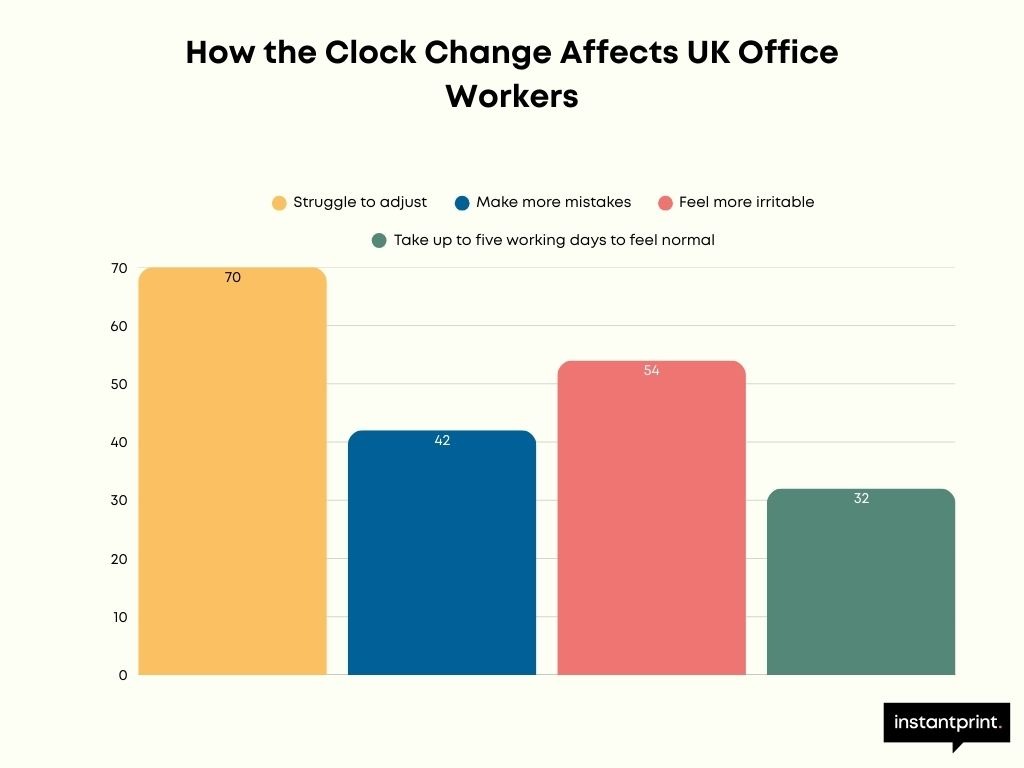
Picture this: it’s the Monday after the clocks have changed. The coffee isn't hitting the spot, and concentrating feels like trying to catch smoke. Sound familiar? For a huge number of people, this feeling isn't just in their heads. Research from the printing company instantprint, which conducted a survey of 2,000 UK office workers, found that a massive 70% of employees dread the clocks going forward. They’re not just being dramatic. The impact on their work is real, with nearly one in three (32%) admitting it takes them a full working week to get back to normal. That’s five whole days of feeling out of sync, which can seriously hamper productivity.
The consequences of this collective fatigue are clear. A whopping 42% of those surveyed said they make more mistakes at work in the days following the time change. These aren't just tiny typos; they can be anything from bungling data entry to missing important meetings. When your focus is shot, silly errors creep in. This isn't a problem confined to one city; it's a nationwide issue affecting employees everywhere, from central London to offices across Yorkshire. This annual seasonal change has a predictable yet often ignored effect on the focus and output of the workforce. It’s a temporary dip, but for businesses, even a short-term drop in productivity matters.
More than just a bad mood
Losing an hour of sleep doesn't just make people less efficient; it also makes them grumpier. The survey highlighted that over half of respondents (54%) feel more irritable during that first week of British Summer Time, with 37% reporting lower motivation levels. This has a knock-on effect on the entire workplace atmosphere. When everyone’s tired and short-tempered, team dynamics can suffer. In fact, 29% said that communication with their colleagues becomes strained, likely because everyone is struggling with reduced concentration and a shorter fuse. Suddenly, simple conversations feel like hard work.
The disruption goes beyond mood. The underlying cause for many of these issues is, unsurprisingly, a lack of quality sleep. The survey found that 63% of workers experience disrupted sleep patterns for several nights after the clocks change. This leads to that all-too-familiar afternoon slump, with 46% feeling noticeably more fatigued by mid-afternoon. For any workplace, a temporary loss of energy and focus can affect collaboration, customer service, and overall output. The wellbeing of employees is directly linked to their ability to perform, and this seasonal shift clearly puts a strain on it.
What can employers actually do?
So, what’s the solution? While nobody can give that lost hour back, there are practical steps employers can take to soften the blow. It’s about acknowledging the problem and offering some simple guidance and support. Sean Kachmarski, a Health and Wellbeing Trainer at instantprint, explains the science behind it simply: “When the clocks go forward, we are effectively shifting everyone’s body clock overnight. Even a single hour can affect sleep quality, energy and focus. If businesses acknowledge that impact and take small supportive steps, they can help reduce the productivity slump that many teams experience.”
The good news is that these supportive steps don’t have to be complicated. Here are a few recommendations for employers to consider ahead of the clock change:
Encourage staff to gradually adjust their bedtimes by 15-20 minutes in the days leading up to the change. It’s a gentler way to ease the body into a new routine.
Promote getting some natural daylight early in the day. A quick walk before work can do wonders for resetting sleep patterns.
Where possible, offer a bit of flexibility with start times for the first few days. A slightly later start could make all the difference.
Avoid scheduling high-pressure meetings first thing on that Monday morning. Let everyone ease into the week without added stress.
Share simple reminders about staying hydrated, moving around, and taking regular screen breaks to help maintain energy levels.
Time for some honest conversations
Perhaps the most surprising finding from the survey is the gap in communication. Despite the widespread impact of the clock change, only 18% of workplaces proactively talk about it or offer any support. This is a huge missed opportunity, especially when 61% of employees said they would appreciate simple guidance or even just an acknowledgement from their employer. It shows that people aren't looking for massive changes, just a bit of understanding about this temporary challenge.
Starting these conversations now, before the end of March, can make a real difference. Dan Robinson, Head of Marketing and eCommerce at instantprint, notes: “The clock change is something we all expect every year, yet our research shows it still affects the majority of office workers. By planning ahead and communicating early, businesses can reduce disruption and demonstrate that they genuinely care about employee wellbeing. Small adjustments can help teams feel more supported and maintain momentum during the transition.” Ultimately, recognising the human impact of this seasonal shift is a simple but effective way for employers to support their teams. With British Summer Time just around the corner, now is the perfect time for businesses across the UK, including those in Yorkshire, to help their employees spring forward with energy and focus, rather than feeling drained and under pressure.
Brands mentioned

Yorkshire Team
The Yorkshire.com editorial team is made up of local writers, content creators, and tourism specialists who are passionate about showcasing the very best of God’s Own Country. With deep roots in Yorkshire’s communities, culture, food scene, landscapes, and visitor economy, the team works closely with local businesses, venues, and organisations to bring readers the latest news, events, travel inspiration, and insider guides from across the region. From hidden gems to headline festivals, Yorkshire.com is dedicated to celebrating everything that makes Yorkshire such a special place to live, work, and visit.
View all articles →