
Welcome to Yorkshire
Published on October 13th, 2025
•Imagine the giant structures that power our country - the wind turbines, the power stations, and even the factories that make our favourite fizzy drinks. The people who build and look after all that are part of a massive sector called the engineering construction industry.
And right now, in Yorkshire and the Humber, this industry is gearing up for a huge change. On the 13th of October 2025, a familiar name, Barry Taylor, stepped back into a major leadership role. He's been appointed as the new Regional Chair for the Engineering Construction Industry Training Board (ECITB) for a second time, a move that's got a lot of people talking about the future of skills and jobs in the region.
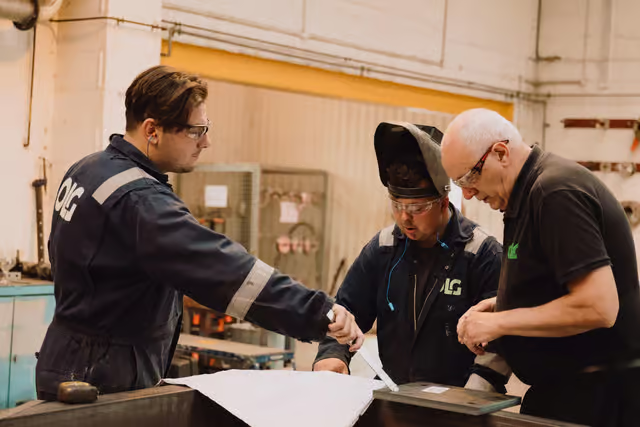
So who is Barry Taylor anyway?
It's always good when the person in charge knows the ropes from the ground up, right? Well, that's Barry Taylor. He's the Managing Director of an engineering design company called OLG, based in Immingham, but his journey in the industry didn't start in a corner office. He began his career as an apprentice, getting his hands dirty and learning the trade over 33 years ago. For the last 15 years, he's been in senior leadership positions, so he's seen the engineering construction world from all angles.
This isn't his first time as the ECITB Regional Chair for Yorkshire and the Humber either; he previously held the post between 2015 and 2017. He's taking over the important role from Andrew Mitchell, who is stepping down after more than seven years of dedicated service. Having someone with Barry Taylor's extensive experience, from apprentice to director, is a massive plus for the employers and the future workforce in the region. His understanding of the challenges at every level of the industry is invaluable.
What on earth is the engineering construction industry?
It sounds a bit complicated, but it's actually the backbone of our daily lives. The engineering construction industry (or ECI for short) is all about the really big stuff. It's not just about building houses; it's about designing, building, and maintaining huge, complex projects. Think about:
- Power: Building and looking after nuclear power plants and renewable energy sources like wind farms.
- Fuel: Managing oil and gas facilities.
- Manufacturing: Creating factories for things like chemicals, medicines, and even our food and drink.
- The Future: Developing brand new technologies to help the planet, like hydrogen power and carbon capture (which is like a giant vacuum for sucking carbon out of the air).
This industry is absolutely essential for the UK to meet its net zero targets - that big goal to stop contributing to climate change. And a huge chunk of that work is happening right here in the Yorkshire and Humber region. The development of these sectors relies heavily on a skilled workforce, which is where the ECITB and its new regional chair come in.
The big opportunity and the bigger challenges
Get this: experts at the ECITB predict that the number of people needed for this kind of work in Yorkshire and the Humber could shoot up by almost 40% in the next five years. That's an extra 2,300 jobs by 2030. Sounds brilliant, doesn't it? More jobs, more opportunities. But there's a catch. Right now, there are some serious challenges. A recent survey found that a whopping 75% of ECI employers in the region are finding it tough to hire people with the right skills. It's a huge headache for businesses.
On top of that, a lot of the current workforce is getting ready to retire. About 16% of workers are over 60. When these experienced hands leave, they take decades of knowledge with them. This creates a massive skills gap that needs to be filled, and filled quickly, to keep the industry moving forward. These are the core challenges that Barry Taylor's new role aims to tackle head-on through better training and development programmes.
A plan to build a legacy of skills
Barry Taylor isn't just warming the chair; he has a clear vision. He believes the key to solving these challenges is for all the local businesses to stop working in isolation and start pulling together. It's all about collaboration and creating strong connections.
"There are much repeated statements about the thousands of workers needed in industry and we as businesses need to respond," said Barry. "There is huge ambition and positivity in this region, but as an industry we need to be more aligned on skills to help each other."
His main job, as he sees it, is to get out there and talk to all the different companies to get them on the same page. The goal is to build a lasting legacy. What does that mean? It means creating a system where there's a constant stream of talented, well-trained people ready for the jobs of the future.
"One of the fundamental parts of this role is to connect with businesses in the region and try to align a common goal around skills development and learning. We've all got an opportunity to create a legacy, but if we don't all play a part then we're going to miss the chance to make a difference,"
he explained. A big part of this plan focuses on boosting apprenticeship programmes, ensuring that young people get the high-quality training they need for long-term careers in the engineering construction industry.
The view from the top
It's not just Barry who's optimistic. The big boss at the ECITB, Chief Executive Andrew Hockey, is thrilled to have him back. He knows the Yorkshire and Humber area is vital for hitting those national net zero goals, especially with all the new carbon capture projects being planned. Andrew Hockey also highlighted the importance of Barry Taylor's experience for the regional skills agenda.
"I am delighted to welcome back Barry as Regional Chair for Yorkshire and the Humber. His experience and passion will be a massive asset to drive forward the skills agenda in the region," Andrew said, also thanking the outgoing chair, Andrew Mitchell, for his work since 2018.
Andrew Hockey stressed that listening to employers and building these regional connections is how the ECITB works best. He acknowledged the hiring challenges and the wave of retirements, making it clear that a team effort is the only way forward.
"We recognise that addressing skills shortages in the region requires a collaborative approach and so it is great to hear Barry's ambitions to work side by side with industry to help ensure the ECI has the skilled workforce it needs both for now and the future." With this strong backing, the new leadership is set to make a real impact on skills development across the entire region.
Yorkshire Team
The Yorkshire.com editorial team is made up of local writers, content creators, and tourism specialists who are passionate about showcasing the very best of God’s Own Country. With deep roots in Yorkshire’s communities, culture, food scene, landscapes, and visitor economy, the team works closely with local businesses, venues, and organisations to bring readers the latest news, events, travel inspiration, and insider guides from across the region. From hidden gems to headline festivals, Yorkshire.com is dedicated to celebrating everything that makes Yorkshire such a special place to live, work, and visit.
View all articles →