
Yorkshire Team
History • March 23rd, 2026
|Right, grab a brew and get comfortable, because it turns out a massive chunk of English history, the bit every schoolkid learns about 1066, might be a bit of a myth. New research from the University of East Anglia has just dropped a bombshell on one of the most famous stories from the Norman conquest. Remember King Harold’s heroic 200-mile forced march from Yorkshire down to the Battle of Hastings? Well, it seems it never actually happened. Instead of a knackered army yomping across the country, the evidence now points to something much cleverer: a journey made mostly by sea using a powerful naval fleet. This isn't just a small tweak to the story, this new research completely changes how people might see the entire battle, and it comes just as the world-famous Bayeux Tapestry is getting ready for a trip to the UK.
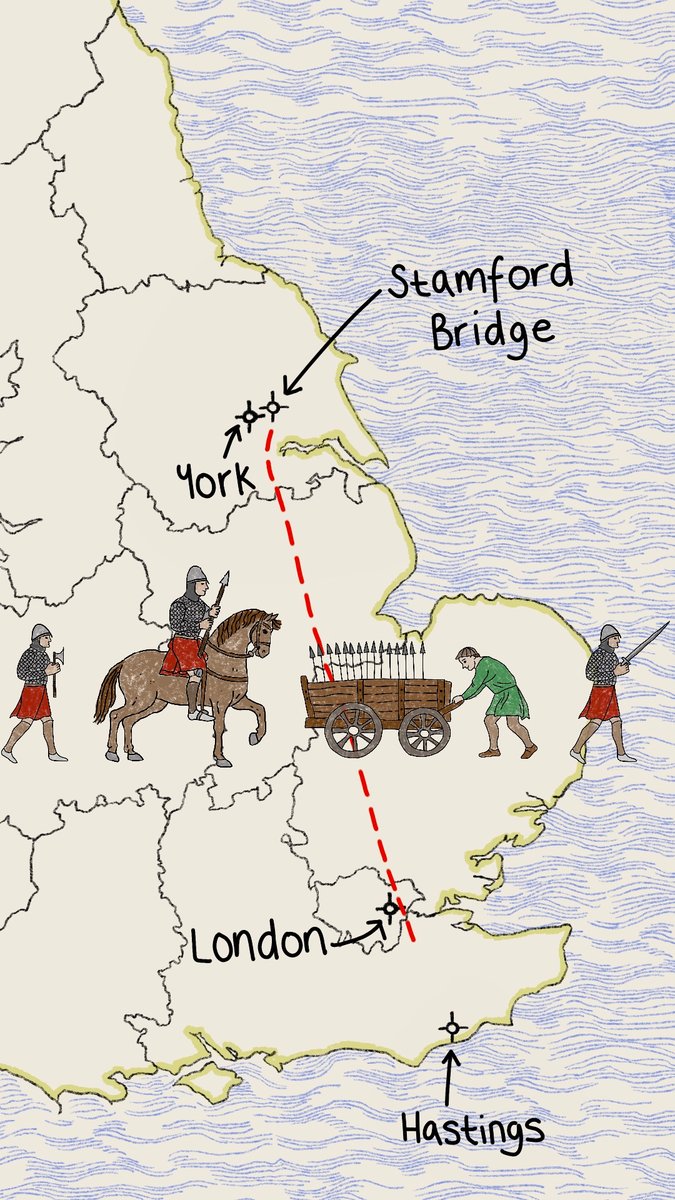
The story we all thought was true
Let's rewind a bit. The story goes like this: it's 1066, a massive year in English history. King Harold has just won a huge battle up north at Stamford Bridge, seeing off the Viking invader Harald Hardrada. But there’s no time to celebrate. News arrives that another challenger, William of Normandy, has landed his army on the south coast. The tale we've been told for centuries is that Harold, in a desperate race against time, forced his exhausted soldiers on an epic 200-mile march south to face this new Norman threat. It’s always been painted as a heroic, against-the-odds dash that left his army tired and at a disadvantage for the Battle of Hastings. It’s a brilliant story of English grit, but according to new findings, it’s likely just that – a story.
A simple mistake that changed history
So, where did this epic march idea come from? It all boils down to a simple misunderstanding. For more than two hundred years, historians have been looking at the Anglo-Saxon Chronicle, one of the most important records of English history from that time. The Chronicle says that in early September 1066, the English ships “came home.” Victorian historians read this and thought it meant Harold had dismissed his entire fleet, sending all his ships and sailors away. This left him with no choice but to travel by land. This one interpretation has shaped the public understanding of the Norman conquest ever since. But new research from University of East Anglia historian Prof Tom Licence suggests this was a massive blunder. The evidence now shows that the ships didn't get disbanded, they just returned to their home base in London and were ready for action. The whole idea of the forced march was, as Prof Licence puts it, a "Victorian invention."
What the new evidence shows
This new research paints a very different picture of King Harold. He wasn't a panicked commander making a desperate dash; he was a clever strategist using all of England’s military power, including a strong naval fleet.

According to Prof Tom Licence, the clues were there all along. “I noticed multiple contemporary writers referring to Harold's fleet, while modern historians were dismissing those references or trying to explain them away,” he said. After looking again at the evidence, he found the idea of the march just didn't hold up. “I went looking in the sources for evidence of a forced march and found there wasn't any.”
Instead of a gruelling overland slog, the journey from Yorkshire was a "sophisticated land-sea operation." Think about it. Would you make your weary soldiers walk 200 miles if you had a load of perfectly good ships waiting? As Prof Licence points out, “Only a mad general would have sent all his men on foot in this way if ship transports were available.” A sea journey would have been faster, safer, and meant Harold's army arrived at Hastings rested and ready for a battle. The research from the university suggests this is exactly what happened, and this changes everything we thought we knew.
Why this discovery matters so much
This isn't just about correcting a dusty old history book. These findings change our view of King Harold from a reactive, exhausted commander into a sharp, strategic king who was coordinating England's defence. The research shows his ‘missing’ fleet was busy defending the coast, helping him fight Harald Hardrada, and then rushing south to take on William. Harold was apparently planning a clever naval pincer movement to trap the Norman army. It was a good plan, but the English fleet likely arrived a bit too late to help in the main battle.
This new perspective is backed by other experts. Roy Porter, from English Heritage, which looks after the Hastings battlefield, said, “It’s exciting to consider that Harold’s response may have been far more sophisticated than previously understood, and William’s awareness of this may have informed when he chose to fight.” It seems the last Anglo-Saxon king was a far better military leader than he's been given credit for. This research will be officially presented on March 24, 2026, at the University of Oxford.
And with the incredible Bayeux Tapestry, which tells the story of the Norman conquest in 70 metres of embroidery, due to be displayed in London, this news couldn't be more timely. Prof Michael Lewis of the British Museum said, “With the Bayeux Tapestry coming to the British Museum later this year, Prof Tom Licence's research shows there is much still to be learned about the events of 1066... Hopefully this new research inspires people to also come and see the Tapestry whilst it is in London.”
The key findings in a nutshell
This research turns a lot of what we thought we knew on its head. Here are the main points from the new findings:
Harold never got rid of his fleet: The evidence from the Anglo-Saxon Chronicle shows his ships were operational the whole time. The idea of a dismissed fleet was a Victorian-era mistake.
The 200-mile march is a myth: No source from the time actually describes this legendary march. A sea journey was much faster and more logical for moving an army from the north to face the Norman invasion.
Harold was a naval strategist: He used his fleet to fight Harald Hardrada and then planned to use his ships in a coordinated land-sea attack to trap William’s forces.
There might have been a forgotten naval battle: The new research even points to evidence of a naval clash between the English fleet and William's ships, a forgotten sea battle in the story of 1066.
So, the story of 1066, one of the most pivotal moments in the history of the English-speaking world, just got a major update. Far from being a story of a desperate, last-ditch defence, it was a tale of high-stakes strategy, powerful naval forces, and a king who was much smarter than history gave him credit for.
Yorkshire Team
The Yorkshire.com editorial team is made up of local writers, content creators, and tourism specialists who are passionate about showcasing the very best of God’s Own Country. With deep roots in Yorkshire’s communities, culture, food scene, landscapes, and visitor economy, the team works closely with local businesses, venues, and organisations to bring readers the latest news, events, travel inspiration, and insider guides from across the region. From hidden gems to headline festivals, Yorkshire.com is dedicated to celebrating everything that makes Yorkshire such a special place to live, work, and visit.
View all articles →


