
Yorkshire.com Editorial Team
Published April 2026
|An Open Return ticket is one of the most flexible, and sometimes confusing, tickets you can buy on the UK rail network. In practice, it's a tale of two journeys: one is locked in, the other is completely up to you. Trainline sells this ticket for people whose return plans are... well, not really plans at all. You get a fixed outward trip, but then you have a whole calendar month to make your way back.
This is the ticket you buy when a business meeting might overrun by a day, or when a weekend trip could spontaneously extend into Monday. You're essentially purchasing breathing room, decoupling your outward journey from the return leg. The fundamental trade-off is paying a bit more than you would for a super-restrictive Advance ticket in exchange for the freedom to show up at the station and just... go home. But understanding how it actually works is key to not getting caught out.
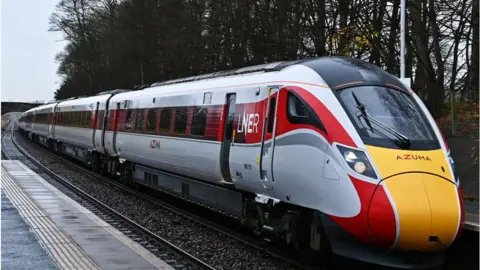
The Outward Journey: The Fixed Part of the Deal
When you book an Open Return, the most critical thing to get your head around is that the "open" part doesn't apply yet. Your outward journey is set in stone.
You have to travel on the date you picked when you booked on Trainline. There's no wiggle room here. From the train operator's perspective, this is a non-negotiable for managing capacity. They need to know how many people are starting their journeys, especially on popular routes. Think of it as the first part of the contract: you commit to a specific departure, and in return, they give you an open-ended invitation to come back. This is what distinguishes it from a fully flexible, and much more expensive - Anytime ticket.
A few hard rules and practical tips for the outbound leg:
The date printed on the ticket is your travel date. Period.
Your route is also fixed. You can’t decide to take a scenic detour.
Get a seat reservation. Seriously. While it's often optional, boarding a busy cross-country service on a Friday afternoon without one is a gamble you probably don't want to take. A reservation guarantees you a place to sit, which is invaluable.
Always check for time restrictions. If you bought an Off-Peak Open Return, your outbound journey must also be on an off-peak service, which can be a real gotcha during the morning rush hour.
The Return Journey: Where the Flexibility Kicks In
This is where the Open Return ticket earns its name. You can travel back any time you want. Well, not any time... let me clarify that. You can travel back on any valid train within one calendar month of your outward travel date. So, if you traveled out on the 10th of March, your ticket is valid for a return journey up to and including the 9th of April.
What's interesting here is how it positions itself against other ticket types. You've got the Advance Single, which is dirt cheap but locks you into a specific train, miss it and your ticket is basically worthless. On the other end of the spectrum is the Anytime Return, which lets you travel whenever you want but often costs a small fortune. The Open Return sits in a practical middle ground. It gives you far more freedom than an Advance fare without the eye-watering cost of full "anytime" flexibility. You don't pre-book the return; you just turn up, hop on a valid service for your route, and find an unreserved seat.
Understanding Route Validity & Connections
A technical but important detail is the phrase "Any Permitted" that you'll likely see on your ticket. In most cases, Open Returns are sold this way. This is fantastic because it means you aren't tied to a specific train operator for your return. For a journey like Manchester to London, for example, an "Any Permitted" ticket lets you use either Avanti West Coast (into Euston) or maybe a slower, alternative route if that's more convenient on the day. It gives you the freedom to choose the best service when you're actually ready to travel.
Of course, there's always a catch. Some cheaper, promotional Open Returns might be restricted to one operator, so it pays to check the fine print on Trainline before you buy.
When you're managing that return trip, keep these things in mind:
Is it "Any Permitted"? This is the key to operator flexibility.
The one-calendar-month validity is firm. Don't try to use it a day late.
No need to book ahead for the return, that's the whole point.
If you have an Off-Peak Open Return, remember that peak-time travel restrictions apply to the return journey too. Don't get caught by the evening rush hour.
Your ticket covers the whole journey, including any necessary changes. Just make sure you're on a reasonable, permitted route. You can’t go from London to York via Bristol.
Keep your ticket handy, whether it's on your phone or a physical copy. You'll need it for ticket barriers and inspections.
A Few Common Questions...
So the outbound journey on an Open Return is totally fixed?
Yes, absolutely. The date you book for your outbound trip is the date you must travel. All the flexibility is loaded onto the return portion, which can be used anytime within that one-month window. It's a common point of confusion.
Can I really just hop on a train from a different company for the return trip?
In most cases, yes. If your ticket is marked 'Any Permitted,' you can use any train operator that runs a reasonable route between your destination and origin. This is a huge benefit on major inter-city lines where multiple companies operate. But, and this is an important but, always check the ticket terms on Trainline. Occasionally, special offers are tied to a single operator.
Do I need to book a seat for my return journey with an Open Return ticket?
No, you don't need a reservation, and in many cases, you can't even make one. The whole idea is "walk-up and go." You board a valid service and find any free, unreserved seat. The reality check here is that on a busy train, this might mean you have to stand for part of the journey. The ticket guarantees travel, not necessarily comfort.
Yorkshire Team
The Yorkshire.com editorial team is made up of local writers, content creators, and tourism specialists who are passionate about showcasing the very best of God’s Own Country. With deep roots in Yorkshire’s communities, culture, food scene, landscapes, and visitor economy, the team works closely with local businesses, venues, and organisations to bring readers the latest news, events, travel inspiration, and insider guides from across the region. From hidden gems to headline festivals, Yorkshire.com is dedicated to celebrating everything that makes Yorkshire such a special place to live, work, and visit.
View all articles →