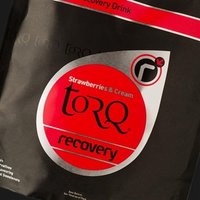
Product Description
TORQ Recovery Drink is a highly advanced post-exercise nutritional drink formulation that has been designed to rehydrate, refuel, repair and recharge your fatigued physiology after heavy exercise. Key Features: 3:1 Carbohydrate : Protein High Quality Whey Protein Multiple Transportable Carbohydrates Glutamine for Muscle/Immune Protection Ribose for Cellular Regeneration Part of the TORQ Recovery System Simply add to WaterTORQ Recovery Drink has been formulated to refuel, recharge and repair muscle tissue, so it is acceptable to reduce your dosage if you feel that you are carrying excess body fat. For instance, if you have a ‘race weight’ that you’re aiming for and know is achievable, take a dose that corresponds to that weight.Also, there’s efficacy for taking a smaller dose of TORQ Recovery for lighter exercise sessions to ‘assist’ in the recovery process – not every session necessarily requires the full dose. That said, ensure that you take the full (optimal) dose where necessary – for exhaustive high volume or high intensity workouts.You should consider getting yourself a TORQ Mixer Bottle, but as TORQ Recovery mixes very easily, as long as you have a receptacle with a watertight lid and some air space for mixing, that should work well too. Always add the level scoops of powder to the appropriate amount of water, not the other way round, and shake well to mix. Chilled water is ideal and adding crushed ice is even better! Once mixed, treat as fresh milk, keep refrigerated and consume within 24 hours.In this section we cover the benefits, properties and ingredients used within this product in detail…Hydration: It goes without saying that rehydration is an important part of the recovery process and the water you mix with the powder to make your drink will clearly help with this process. In situations where fluid losses are particularly high, your TORQ Recovery Drink will not provide sufficient fluid for comprehensive rehydration, so you should continue to drink plenty of fluids after your recovery drink has been consumed. Remember that comprehensive rehydration in exceptional circumstances also requires the replacement of lost electrolytes to restore homeostatic balance, so you may also wish to consider consuming TORQ Hydration to further assist the fluid replacement process when necessary.Refuelling/Replenishing Carbohydrate Stores: The body holds a very limited amount of stored (endogenous) carbohydrate in the muscles and liver – and this stored endogenous carbohydrate is called ‘glycogen.’ In total these stores equate to around 5% of the body’s total energy stores, however carbohydrate is the preferred fuel source and during exercise can equate to over 50% (or more) of total energy expended, depending on the intensity and duration of the exercise. These limited stores combined with a limited capacity to absorb and use carbohydrate during exercise can result in them becoming almost completely depleted during an intense endurance training session or competition.Once depleted, the body can replenish these glycogen stores in around 24hours to full resting levels, provided sufficient carbohydrate is taken in, however this process can take much longer if inadequate carbohydrate is consumed. Due to the time it takes for the body to restock these stores during heavy bouts of training and competition, where sessions are completed with limited rest and recovery, getting sufficient fuel on board and stored as glycogen becomes critical to performance in subsequent sessions and has been shown through research to restore exercise capacity more rapidly.Post exercise, there are two main phases to replenishing carbohydrate stores. Initially there is a very rapid phase which occurs independently of the hormone insulin and lasts around 30-60 minutes and this is followed by a much slower insulin-dependent phase which can last several hours. During this initial phase, the body is able to rapidly convert carbohydrate into glycogen thanks to the activity of the exercise-dependent Glut-4 transporter which works in a similar way to insulin. This, in combination with an increased exercise-induced insulin sensitivity, aiding the storage process further, makes it absolutely vital that the correct calories are consumed within the brief post-exercise window. Delaying carbohydrate intake by 2 hours or more has been shown to reduce the rate of carbohydrate storage (re-synthesis) by 50% which is not advisable with another competition or hard training session looming. It is therefore important to make best use of this immediately after exercise by ensuring adequate carbohydrate and this is why we recommend that TORQ Recovery is consumed within 15 minutes of finishing exercise.So there is a well established need for carbohydrate post exercise, but how much is required and in what form? Due to the limited timeframe in which the body is able to rapidly store carbohydrate after exercise, it pays to make maximum use of this time and g