
Welcome to Yorkshire
History • June 19th, 2024
|Most today will be unfamiliar with the name Lavinia Fenton. And yet, so taken was he with this English actress who played the role of Polly Peachum in the first run of John Gay’s magnum opus The Beggar’s Opera in 1728, that Charles Powlett, 3rd Duke of Bolton, a married man, constructed a monument for her atop Capple Bank near Wensley in North Yorkshire – uncoincidentally, about a mile south-east of the duke’s residence of Bolton Hall. Far from a philanderer, the duke had actually been locked in an arranged marriage to an heiress from whom he had been separated for years.
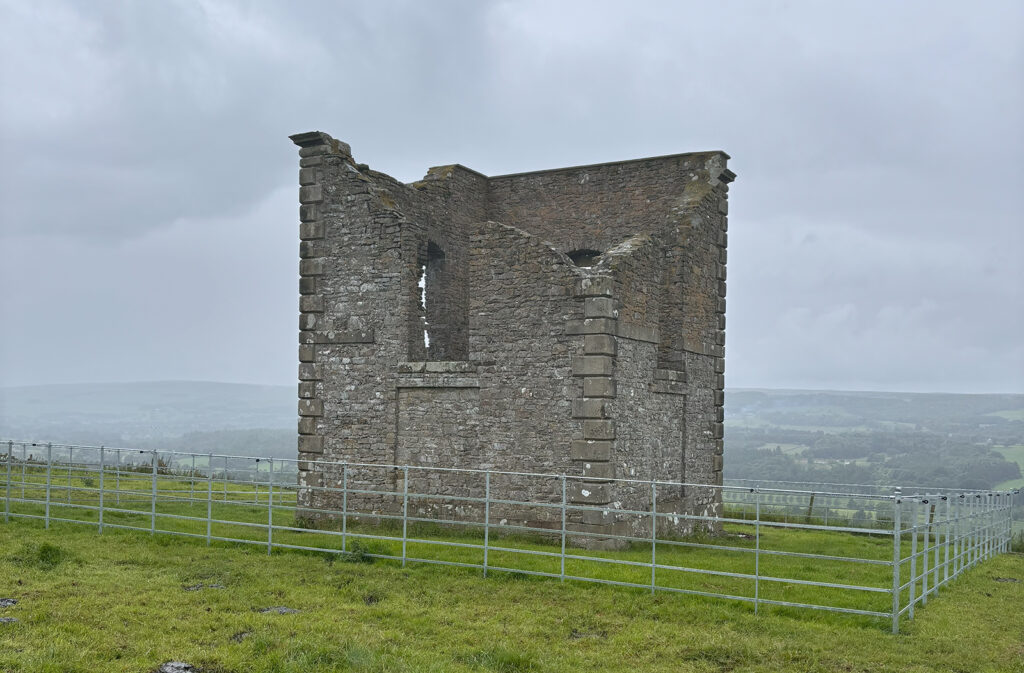
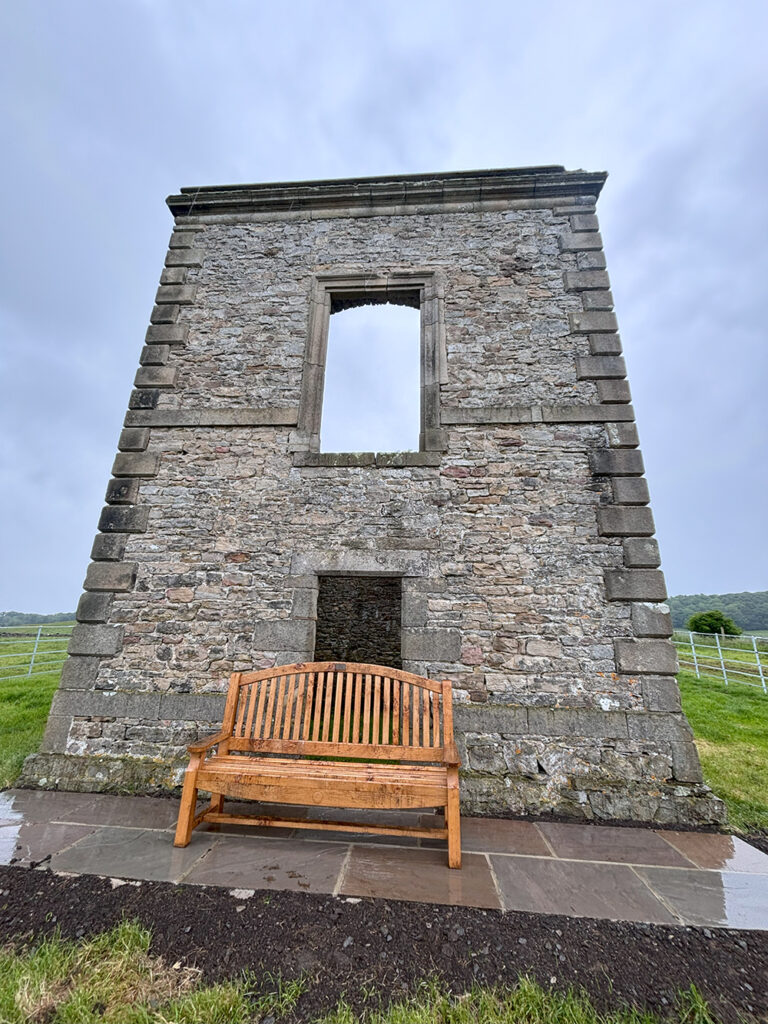
In fact, some say the tower was built as a hunting lodge and, if so, is one of the country’s earliest sporting structures; others suggest it was transformed into a stage by the lovelorn aristocrat for his beloved Fenton. Regardless, it is speculated that after meeting, the duke and Fenton soon became a couple, with her as his mistress for 32 years and bearing him three sons. In 1752, he finally made her an honest woman when Lavinia became his second wife. Hence, the site was colloquially dubbed ‘Polly Peachum’s Tower’.
First depicted on an early 18th-century map when it stood in unenclosed parkland, a few years later the tower was represented on another with a crowning cupola and hemmed in by a square enclosure, possibly a garden, its high elevation allowing an almost perfect vantage point for hunting, as well as provided guests with shelter and entertaining space. At this time, it was referred to as the Temple in Mount Park, thus is also given the moniker ‘The Mount’.
The origins of the tower remain ambiguous, but the legend of Polly Peachum endures. In reality, it is thought that the couple spent relatively little of their love story at the Bolton estate.
Today, the tower stands ruinous; its former two-storey appearance no longer apparent as it is without a roof. Yet its construction of coursed Great Scar limestone is clearly of some quality and echoes the penchant for neoclassical design of the early 1700s.
Books by Dr Emma Wells
Emma Wells
Dr Emma Wells has appeared as a historian on Yesterday, Curiosity Stream, Viral History, From the Dales to the Sea – A Great British Story, and as a ‘Don’ on BBC Radio 4’s The 3rd Degree and much more. Her first book, Pilgrim Routes of the British Isles, was released in 2016, and her most recent book Heaven On Earth: The Lives & Legacies of the World’s Greatest Cathedrals, was published in 2022.
View all articles →


