Yorkshire Team
Published on April 8th, 2026
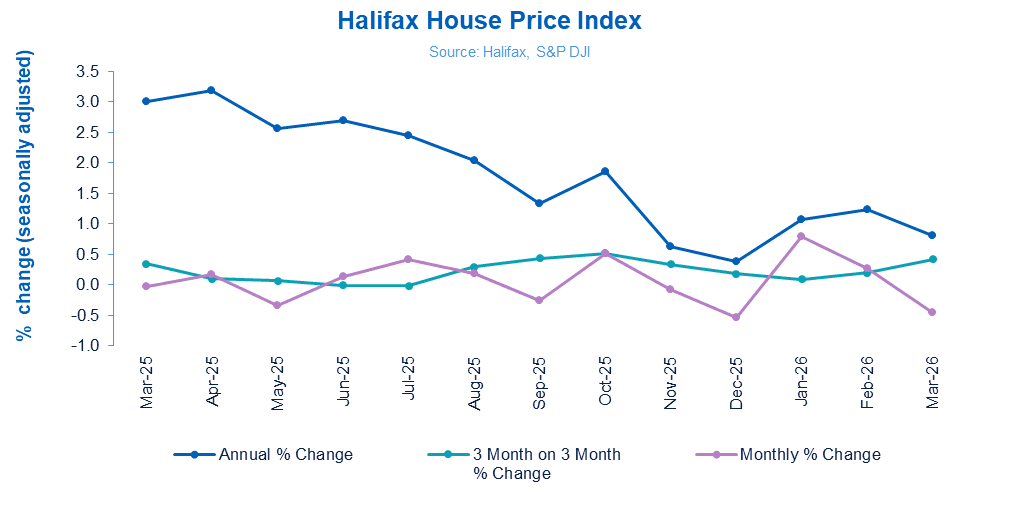
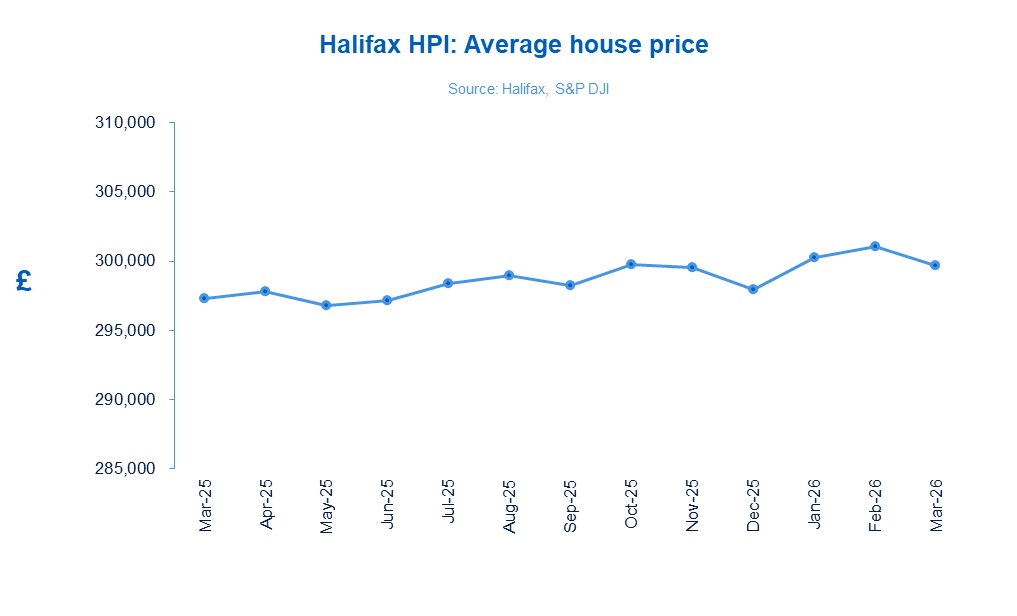
•If you're keeping an eye on the property market, perhaps thinking about a move this spring, the latest figures might have you scratching your head. After a bit of a positive buzz in February, the UK housing market decided to take a slight breather in March 2026. The latest Halifax House Price Index shows that house prices experienced a small dip, pulling the average property price just shy of the £300,000 mark. But before anyone starts panicking, it’s worth noting that the bigger picture still shows growth over the year. It's a bit like the classic British weather – a few cloudy days don’t necessarily mean summer has been cancelled.
What’s the latest on house prices?
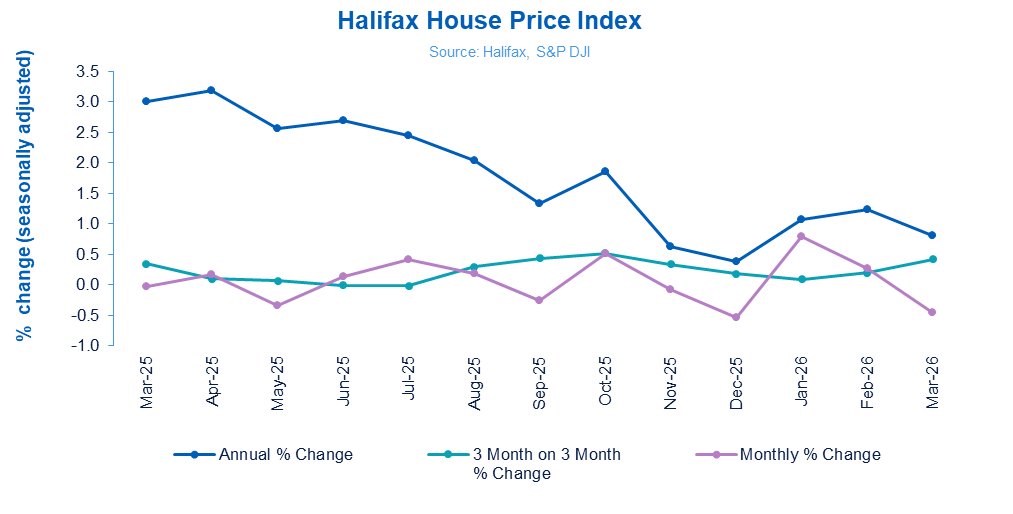
Let's break down the numbers from the April 8, 2026, report. After a small rise of +0.3% in February, the average price for a house fell by -0.5% in March. This small step back means the typical home value across the UK now stands at a hefty £299,677. While that’s a slight dip month-on-month, it’s always good to look at the bigger trend. The quarterly change still shows a positive +0.4%, and the annual growth is sitting at +0.8%. This annual change has slowed a little from the +1.2% seen in February, which suggests the market has lost a bit of its early-year momentum.
House prices fell by -0.5% in March.
The average property price is now £299,677.
Annual growth has slowed to +0.8%.
Northern Ireland is seeing the highest annual percentage price growth.
The North East has also shown strong annual growth, coming in at +5.0%.
Why the wobble in the housing market?
So, what's causing this slight cooling of the prices? It seems that uncertainty on the global stage is having a ripple effect on the UK economy. When people are a bit unsure about the future, big financial decisions, like buying a new house, often get put on the back burner. This caution is being reflected in the latest housing market figures.
Amanda Bryden, Head of Mortgages at Halifax, offered some insight into the situation. She points out that the market is reacting to a mix of factors that are making buyers think twice.
“House prices fell -0.5% in March, following the modest +0.3 per cent increase seen in February. As a result, the average property price is now £299,677. The pace of annual growth has also eased, slowing to +0.8 per cent from +1.2 per cent the previous month, suggesting the market has lost some momentum as spring begins.”
“The recent slowdown in the housing market reflects the wide uncertainty regarding the conflict in the Middle East. Concerns about higher energy prices have pushed up inflation expectations, which in turn led to a rise in mortgage rates, reducing confidence that interest rates will be cut this year and dampening the initial momentum in the market seen at the start of the year.”
For anyone trying to buy, especially for the first time, rising mortgage rates are a big deal. Imagine a young couple who have been saving for years; just as they get their deposit together, the cost of borrowing starts to creep up. It can feel like the goalposts are constantly moving. This is why many potential buyers are now watching the interest rates very closely before making any big moves.
Is it a north-south story?
As is often the case with the UK housing market, where you live makes a huge difference. The latest data paints a classic picture of a north-south divide, with stronger price growth in the northern regions of England, as well as in Northern Ireland and Scotland, while the south is experiencing more of a cool-down.
Northern Ireland is currently the star performer, leading the UK with an impressive annual growth of +8.7%. This has pushed the average price there to £224,809. The North East of England is also having a strong year, with prices rising by +5.0%, bringing the average home to £184,119. In Scotland, there was also strong growth, with a +4.4% rise in average house prices, while Wales saw a more modest increase of +1.6%.
By contrast, the southern markets, including London, are seeing average values ease off. The South East saw the biggest drop, with an annual change of -1.9%, though the average price remains high at £383,573. Even in London, the average home value has fallen by -1.2% over the last year.
Northern Ireland — Average House Price: £224,809 | Annual Change: +8.7%
North East — Average House Price: £184,119 | Annual Change: +5.0%
Scotland — Average House Price: £222,716 | Annual Change: +4.4%
North West — Average House Price: £247,442 | Annual Change: +3.1%
Wales — Average House Price: £230,909 | Annual Change: +1.6%
South East — Average House Price: £383,573 | Annual Change: -1.9%
London — Average House Price: £536,751 | Annual Change: -1.2%
What does this mean for the future?
While the dip in March might give some buyers pause for thought, it’s important to remember that the overall market isn’t in a freefall. The key takeaway is one of resilience. Amanda Bryden from Halifax noted that the current situation is very different from the sharp shocks seen in the past, and many households have a buffer.
“However, the recent increase in UK mortgage rates has been more modest than the sharp rises seen during the mini budget of 2022. Further, many households will already be on fixed deals, protecting them from the latest rate rises. Taking all this into account, house prices may prove resilient, even if uncertainty weighs on market activity in the near term.”
What this means is that while new buyers are feeling the pinch of higher mortgage rates, many existing homeowners are on fixed deals, so their monthly payments aren't affected just yet. This creates a level of stability in the market, preventing a rush of people needing to sell. The future of the housing market and any price growth will depend heavily on the wider economy, inflation expectations, and, crucially, what happens with interest rates. For now, it seems the market is in a 'wait and see' phase, navigating the uncertainty with a steady hand.
Brands mentioned

Yorkshire Team
The Yorkshire.com editorial team is made up of local writers, content creators, and tourism specialists who are passionate about showcasing the very best of God’s Own Country. With deep roots in Yorkshire’s communities, culture, food scene, landscapes, and visitor economy, the team works closely with local businesses, venues, and organisations to bring readers the latest news, events, travel inspiration, and insider guides from across the region. From hidden gems to headline festivals, Yorkshire.com is dedicated to celebrating everything that makes Yorkshire such a special place to live, work, and visit.
View all articles →