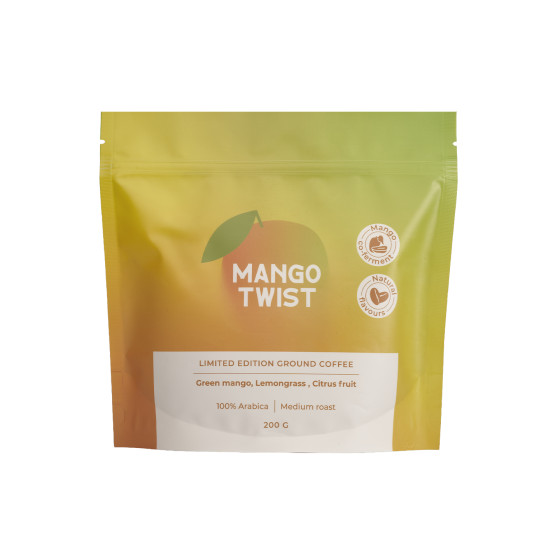
Product Description
Fermented with real mangoes, this coffee turned out funky, fruity, and just a little wild. You're gonna love the ride!If you're a coffee drinker who often struggles to really feel the tasting notes indicated on the packaging (what is aftertaste anyway?..), trust us on this one: this particular coffee is guaranteed to be an exception. Thanks to its innovative processing method, it smells like mango lemonade, with refreshing hints of lemongrass and bright citrus mixed in. A tropical twist in your morning cuppa! Sipping on a beverage like this can truly make you stop for a moment and wonder, "Is this truly coffee I'm drinking?..”Straight from Colombia—with love and innovationThis limited-edition coffee has reached us all the way from the Colombian region of Huila, where the "Monteblanco" coffee estate is located. Rodrigo Sanchez—the owner of the family-run coffee farm—has been experimenting with innovative processing methods for years now, looking for that elusive flavour that truly does make you go "wow!". He’s been successful at it too: Rodrigo's efforts have been recognised with a number of prestigious awards.How does this tropical brew come about?In short: imagine a wild party where coffee and tropical fruit come together to dance the night away.For those interested in the full story though...1. The exact right beans. For this coffee, Rodrigo selected an arabica varietal called Purple Caturra—boasting plenty of natural sweetness, it's suited perfectly for fermentation.2. Fermentation begins. The coffee beans are first poured into the main reservoir, where they're left to ferment on their own for a while—it's like a warm-up before the wild party ahead! 3. Whipping up the fruity co-ferment solution. Fished out from the main reservoir, unique microorganisms (lactobacillus and saccharomyces cerevisiae) are transferred to a separate container, where they're mixed with real mangoes, citrus juice, and a sweetener (typically molasses). This fruity concoction is then fermented for another 8 days, until the ideal Brix and pH values are obtained.4. Onto the tropical tango! The fruity mixture then rejoins the coffee beans. It's a lengthy feast indeed: the two keep on co-mingling for a further 180 hours—which adds up to more than a week!5. Keeping a close eye. The process is monitored carefully throughout: sugar concentration (measured in degrees Brix) must not fall below a value of 6, while the pH needs to be kept above 4 at all times. That's how a rich, yet far from overpowering, flavour of mangoes develops. Why is this stage so important? Because it results in a brew that is distinctly tropical, yet still lets the unique character of the coffee itself shine clearly through.6. Drying and getting ready to be roasted. Once the right flavour balance is obtained, the beans are left to dry. With the ideal moisture content of 10–11%, they're then off to the roasters. 7. Taking to the stage—or rather your coffee cup. After conquering the many challenges on this long tropical journey, your co-fermented coffee is now finally where it's supposed to be—which is your coffee cup, of course. Let the flavour feast begin!*****Country | ColombiaRegion | Huila Farm | "Monteblanco" estate managed by Rodrigo Sanchez Altitude | 1730 mArabica varietal | Purple Caturra Process | Washed, mango co-fermentationRoast profile | MediumFlavour palette | Mango, lemongrass, citrus fruitRecommended brewing methods: all manual brewing tools (V60, Chemex, etc.), as well as in-cup brewing.Ingredients: ground roasted coffee.Storage conditions: keep sealed in a dark, dry and cool place.