
Explore Bolton - Places to Stay & Things to Do in East Yorkshire
Welcome to Bolton, a town located in East Yorkshire. Explore local things to do, find places to stay, and discover beautiful walks in the surrounding area.
Bolton, a charming town in East Yorkshire, offers a delightful escape for those looking to explore the beauty of the region. With its close proximity to the stunning Yorkshire Dales, it serves as a perfect base for outdoor enthusiasts and nature lovers alike. You can venture out to nearby Hebden or Grassington for picturesque walks and breathtaking scenery. Bolton boasts a couple of unique attractions, making it an inviting destination for visitors. Whether you're interested in local history or simply enjoying the tranquil surroundings, there's something to pique your interest.
Be sure to check out the local listings for things to do in Bolton and make the most of your visit. With a variety of accommodations available, including 13 hotels, you'll find the perfect place to relax after a day of exploration. Don't miss out on the opportunity to experience the charm of Bolton and its surroundings! Check out things to do in Bolton.
Stay in Bolton


Things to Do in Bolton


The old polishing shop
Uncover beautiful artefacts, handmade goods, and expert furniture polishing at Grassington's highly-rated antique and curio shop.

Jean's Field
Jean's Field in Cracoe offers a charming camping experience nestled in a peaceful residential area. Visitors can enjoy the convenience of nearby amenities such as a delightful cafe and farm shop, perfect for a hearty breakfast. The site provides essential facilities including portaloos and a shower, ensuring a comfortable stay amidst the beautiful Yorkshire countryside.
Food & Drink

Retreat Coffee, Kitchen & Accommodation
Experience delicious food, excellent coffee, and charming boutique accommodation at Retreat in picturesque Grassington.

Devonshire Arms
Devonshire Arms offers great dining in cracoe.

Retreat Tearoom & Bistro
Browse by Type
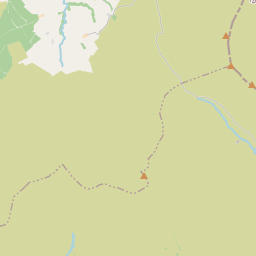
Interactive Map
View accommodation, attractions, restaurants, and events on the map
Geographic Facts
This town is geographically within the following regions:
Upcoming Events in Bolton
View All Events in Bolton →No events found for Bolton yet.
No events found for this period. Check back soon!
View all events in BoltonLatest news from Bolton
All Local News →
Goole & Howdenshire Business Excellence Awards – Winners: The Complete List of 2026 Honorees
The Goole & Howdenshire Business Excellence Awards 2026 was a huge celebration. See the full list of winners from the record-breaking ceremony in Yorkshire.

Who Is HICA Group's New Head Of Estates Rob Harrison And What Are His Plans For Health & Safety?
HICA Group appoints Rob Harrison as Head of Estates and Health & Safety. Discover his plans to invest in modern, welcoming homes for residents and families.
Walkshire in Bolton
More Walks in Bolton →
Walk: Grimwith
This simple walk takes you around the beautiful Grimwith Reservoir. Take along your binoculars and you might see wigeon, teal, greylag and Canada geese on the water. The Route what3words for start point: ///motor.smarter.chucked Start / Finish Point: Grimwith Reservoir Car Park, New Rd, Hebden, Skipton BD23 5ED Distance: 4.2 Miles GPX Route Map drawaroute-15Download Walk Description The route to the east follows a well-surfaced track to a width of at least 200cm. There are some gradients reaching 1:8 to access the water’s edge but most of the route is relatively flat. The first section of the route to the west passes over the dam and is unsurfaced. From here, the track is surfaced with some gradients reaching a 1:6. Grimwith Reservoir is one of the best places to see wildfowl in the Yorkshire Dales so take along your binoculars and you might see wigeon, teal, greylag and Canada geese on the water.

Walk: Burnsall & Troller’s Ghyll
A walk through Burnsall, Troller’s Ghyll, Parceval Hall, Howgill and over the River Wharfe. The Route what3words for start point: ///professes.desktops.trickle Start Point: Burnsall, Wharfedale Finish Point: Burnsall, Wharfedale Distance: 8.3 Miles GPX Route Map burnsall-and-trollers-ghyllDownload Walk Description Troller's Ghyll Legends and folklore make for a fascinating walk. Amongst the hills and valleys near the village of Appletreewick is a limestone gorge so dark and forbidding that our ancestors once feared it. They believed it to be the haunt of trolls, hence its name of Trollers Ghyll. According to legend these trolls, or mischievous fairies, roll stones down the steep hillside onto the heads of unwary walkers! A more sinister tale is told of a wolf-like beast that lives in a cave in this ravine, with large fangs and staring eyes the size of saucers. This is the infamous Barguest, which preys on unsuspecting travellers – if your eyes meet then it is certain death! These legends have their origins in Norse mythology. Just above Trollers Gill are the crumbling remains of Gill Head Mines, the last working underground mines in the Yorkshire Dales. Lead was mined here between the 18th Century and the early 1900s; however, it reopened in the 1920s as a fluorspar mine which then continued in production until 1981. The surrounding moors are littered with the remains of the lead mining industry that once flourished in this area. Lead mining can be traced back to the Romans, although it was during the 18th and 19th Centuries that the mines were developed on a large-scale commercial basis with the advent of new mining and pumping technologies. Many years ago a pig of lead was discovered on the flanks of Nursery Knot with the Roman inscription of ‘Trajan’ on it, although this has since been lost.

Walk: Grassington, Grass Wood, Conistone Dib and Lea Green
A walk around Grassington, Ghastrill’s Strid, Grass Wood, Conistone Dib and Lea Green in the Yorkshire Dales. The Route Start Point: Grassington, Wharfedale Finish Point: Grassington, Wharfedale Distance: 8.5 Miles GPX Route Map grassington-conistone-and-lea-greenDownload Walk Description Grassington is an attractive small town set amongst the rolling hills of Upper Wharfedale, a popular tourist destination due to its picturesque cobbled square, stone cottages and winding alleyways. From Grassington, our route follows the River Wharfe to the impressive limestone rapids of Ghastrill’s Strid (admire from a safe distance), before reaching Grass Wood. This ancient swathe of woodland once formed part of the much larger forest of Wharfedale and has many indigenous tree species and almost 400 species of flowers and plants, thus meriting Nature Reserve status. It is a truly magical place to explore in spring. Beyond Grass Wood our path traverses the dry limestone gorge of The Dib, a glacial meltwater channel, before reaching Conistone, an attractive Craven village that boasts many fine old farmhouses, a large maypole and the oldest church in the southern Dales that dates back to pre-Conquest times. St Mary's Church still has some pre-Norman arches as well as wealth of other interesting features including a poor box. In the graveyard is a sad memorial to a group of young men who were killed in a tragic pot-holing accident at Mossdale Cavern in 1967. From Conistone, a footpath leads up through the spectacular dry limestone valley of Conistone Dib, one of the ‘natural wonders’ of the Yorkshire Dales. This deep steep-sided gorge was scoured out by glacial meltwaters towards the end of the last Ice Age when the permafrost prevented the water from seeping down through the limestone bed-rock. In places, Conistone Dib closes in to little more than a narrow passage beneath towering limestone crags. This whole area boasts some wonderful limestone scenery with pavements, dry valleys, crags and outcrops all around. From Conistone Dib, the return leg of this walk crosses Lea Green and the remains of one of the largest Iron Age settlements in England. This was occupied from 200BC until 400AD, surviving throughout the Roman occupation because of its secluded situation high on the hills. Rectangular fields, hut circles and traces of roads can be clearly seen, although to the untrained eye it appears to be a very rough scattering of fields covered with lots of grassy bumps! As with many other archaeological sites, the true picture only really comes to life when viewed from the air.

Walk: Burnsall and Thorpe
Follow the lovely banks of the River Wharfe to Linton Falls before heading across rolling Dales countryside linking villages and hidden valleys. The Route what3words for start point: ///turkey.exactly.improvise Start Point: Burnsall Finish Point: Burnsall Distance: 8 Miles GPX Route Map burnsall-and-thorpeDownload Walk Description Burnsall is an attractive village with a large village green beside the River Wharfe surrounded by old stone cottages. Of particular note is St Wilfred’s Church, which dates back to the 9th Century as many Anglo-Scandinavian crosses and gravestones have been found in the area. Beside the church is the village school, founded as a Grammar School in 1602 by Sir William Craven, Yorkshire’s very own Dick Whittington who set out from Appletreewick to travel to London to seek his fortune. This he did, and rose to become Lord Mayor of London. He never forgot his roots and gave generously to many local projects. We follow the River Wharfe northwards, an attractive stretch of riverside; the word ‘wharfe’ comes from the Old Norse and means ‘winding river’. We soon reach Loup Scar, a small limestone gorge which holds a dark secret. Back in the 18th Century Tom Lee was the blacksmith at Grassington, and notorious robber. Dr Petty knew as much, and threatened to tell the authorities, however, after an evening at a Kilnsey hostelry, Lee murdered Dr Petty on his way home through Grass Wood and threw his body into the Wharfe at Loup Scar. He was only caught after his servant broke down and confessed, and Lee was sentenced to death. We follow the Wharfe all the way to reach Linton Falls, where the river tumbles over limestone ledges formed by the Craven Fault. Note the weir and mill race that once provided power for Linton Mill. The river is left behind on the way to Linton, with its attractive green, stream and old houses. At one end of the green stands Fountaine Hospital, a fine Georgian building reputedly designed by Vanbrugh. The Hospital incorporates six almshouses and was endowed by Richard Fountaine in 1721 for six poor of the parish. Richard Fountaine made his fortune as a timber merchant and coffin maker in London during the Plague of 1665 and Great Fire of 1666, and became an Alderman of the City. From Linton, the route heads between the the grassy hills of Elbolton and Stebden Hill, which were formed as coral reefs 350 million years ago in a tropical sea. These hills shelter the ‘secret valley’ that leads down to the hidden village of Thorpe. During the troubled times of the Middle Ages, local people would seek refuge from raiders in this village.
Weather in Bolton
Full Forecast →About Bolton, East Yorkshire
Bolton is a town in the East Riding of Yorkshire, known for its proximity to several charming villages and towns. With a total of 15 places to discover, Bolton offers a quaint experience within the rich landscape of East Yorkshire.
Where Is Bolton?
Bolton is located in East Yorkshire, approximately 1.3 miles from the village of Hebden and 1.9 miles from the town of Grassington. The town is part of a region that features a mix of scenic countryside and access to larger urban areas.
What Is Bolton Known For?
Bolton's charm lies in its rural character and accessibility to nearby attractions. As part of East Yorkshire, it provides a gateway to explore the region's rich history and natural beauty. Visitors can enjoy the tranquillity of local villages while being close to the amenities of larger towns like Hull and Bridlington.
Visiting Bolton
With 2 things to do listed in Bolton, visitors can explore local attractions that highlight the town's character. The surrounding area is also dotted with villages such as Burnsall and Thorpe, making it easy to discover more about the region's charm.
How Far Is Bolton from Hull?
Bolton is approximately 20 miles west of Hull, making it a convenient spot for exploring both local and urban attractions.