Browse

DJI Lito 1 4 rotors Quadcopter 48 MP 3840 x 2160 pixels 2590 mAh Grey
by DJI
£292.00from 4 retailers
GTIN00190021172524
EAN0190021172524
MPNCP.MA.00000990.01
Prices updated 26 Jun 2026
Compare 4 Retailers
Save up to £33.38 by comparingPrices checked 13h ago
In stockStandard delivery in 3 working days
1 deal available£350.39£292.00
Best Price
In stock3-5 working days
Amazon
Check live price on Amazon.co.uk

In stockStandard delivery in 3 working daysNew

In stockNext DayNew
eBay
Check availability and price on eBay.co.uk. Yorkshire.com may be paid for purchases made through this link, by eBay Partner Network.
Can’t find it elsewhere?
Product Description
The omnidirectional vision system only assists flight safety under certain conditions and is not a substitute for your own judgment and control. During a flight. always pay attention to the surrounding environment and the warnings on the DJI Fly app. and be responsible for and maintain control of the drone at all times. When GNSS signals are unavailable. the optimal positioning altitude range for using the vision positioning system is 0.5 to 30 m. The vision positioning performance may decrease when flying beyond this range. Fly with caution. The vision system may not function properly when the drone is flying over water. which may prevent it from actively avoiding water surfaces below when landing. Operators should maintain control of the drone at all times. make operational decisions based on an assessment of the surrounding environment. and avoid relying solely on the vision system. The vision system cannot detect certain objects or surfaces. including large structures with frames and cables (e.g.. tower cranes. high-voltage transmission towers. high-voltage transmission lines. cable-stayed bridges); surfaces with no texture or sparse texture; surfaces with repetitive identical patterns or textures (e.g.. small tiles of the same color); solid-colored surfaces (e.g.. pure black. pure white. pure red. pure green); strongly reflective or mirrored surfaces (e.g.. ice. road signs); water or transparent surfaces; surfaces of moving objects (e.g.. above moving crowds. above waving shrubs or grass); moving obstacles (e.g.. walking people. moving vehicles); scenes with drastic lighting changes; surfaces that are extremely dark (e.g.. less than 1 lux) or extremely bright (e.g.. more than 100.000 lux); materials with strong infrared absorption or reflection properties (e.g.. mirrors. glass. road signs. asphalt); small obstacles (e.g.. fences. branches. power lines); and thin poles or small vertical objects (e.g.. utility poles. street lamps). Do not obstruct or interfere with the sensing system under any circumstances. Ensure that all lenses remain clear. free from dirt. smudges. or other contaminants. and are not scratched. Vision system cameras may need to be calibrated after being stored for an extended period. A prompt will appear in the DJI Fly app and calibration will be performed automatically. Do not fly when it is rainy. smoggy. or the visibility is lower than 100 m. Before takeoff. inspect the sensing system's glass surfaces. Remove any protective film. stickers. or other obstructions. If water droplets. fingerprints. or smudges are present. clean the glass using a lint-free cloth. Do not use alcohol or other organic solvents. If the glass surface is loose. broken. scratched. or worn. send the drone to an authorized service center for repair. Refer to the product's user manual for more details.The omnidirectional vision system only assists flight safety under certain conditions and is not a substitute for your own judgment and control. During a flight. always pay attention to the surrounding environment and the warnings on the DJI Fly app. and be responsible for and maintain control of the drone at all times. When GNSS signals are unavailable. the optimal positioning altitude range for using the vision positioning system is 0.5 to 30 m. The vision positioning performance may decrease when flying beyond this range. Fly with caution. The vision system may not function properly when the drone is flying over water. which may prevent it from actively avoiding water surfaces below when landing. Operators should maintain control of the drone at all times. make operational decisions based on an assessment of the surrounding environment. and avoid relying solely on the vision system. The vision system cannot detect certain objects or surfaces. including large structures with frames and cables (e.g.. tower cranes. high-voltage transmission towers. high-voltage transmission lines. cable-stayed bridges); surfaces with no texture or sparse texture; surfaces with repetitive identical patterns or textures (e.g.. small tiles of the same color); solid-colored surfaces (e.g.. pure black. pure white. pure red. pure green); strongly reflective or mirrored surfaces (e.g.. ice. road signs); water or transparent surfaces; surfaces of moving objects (e.g.. above moving crowds. above waving shrubs or grass); moving obstacles (e.g.. walking people. moving vehicles); scenes with drastic lighting changes; surfaces that are extremely dark (e.g.. less than 1 lux) or extremely bright (e.g.. more than 100.000 lux); materials with strong infrared absorption or reflection properties (e.g.. mirrors. glass. road signs. asphalt); small obstacles (e.g.. fences. branches. power lines); and thin poles or small vertical objects (e.g.. utility poles. street lamps). Do not obstruct or interfere with the sensing system under any circumstances. Ensure that all lenses remain clear. free from dirt. smudges. or other contaminants. and are not
More products from ComputersDeal
Browse their full range on Yorkshire.com
Popular on Yorkshire.com


What You're Buying
What Yorkshire.com visitors have been buying recently

Hugo Boss Flawless Women's Multifunction Watch - 36mm Rose Gold Dial with Silver Mesh Bracelet
£179.00
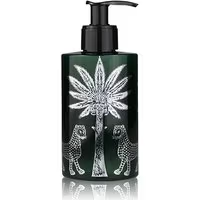
Ortigia - Fico d'India Body Cream 300 ml - Moisturizing Body Cream
£61.00

Oman Luxury - Wasla Eau de Parfum 100 ml - Unisex Woody Perfume
£220.00

Ray-Ban RB4457D 667787 Sunglasses
£82.00

Hyundai 56cc Petrol Brushcutter and Grass Trimmer, 2-in-1, Includes Harness
£119.99

Bluebella Latex Suspender Black - XS
£64.00
From£292.00ComputersDeal
Buy Now