Welcome to Yorkshire
History • September 21st, 2025
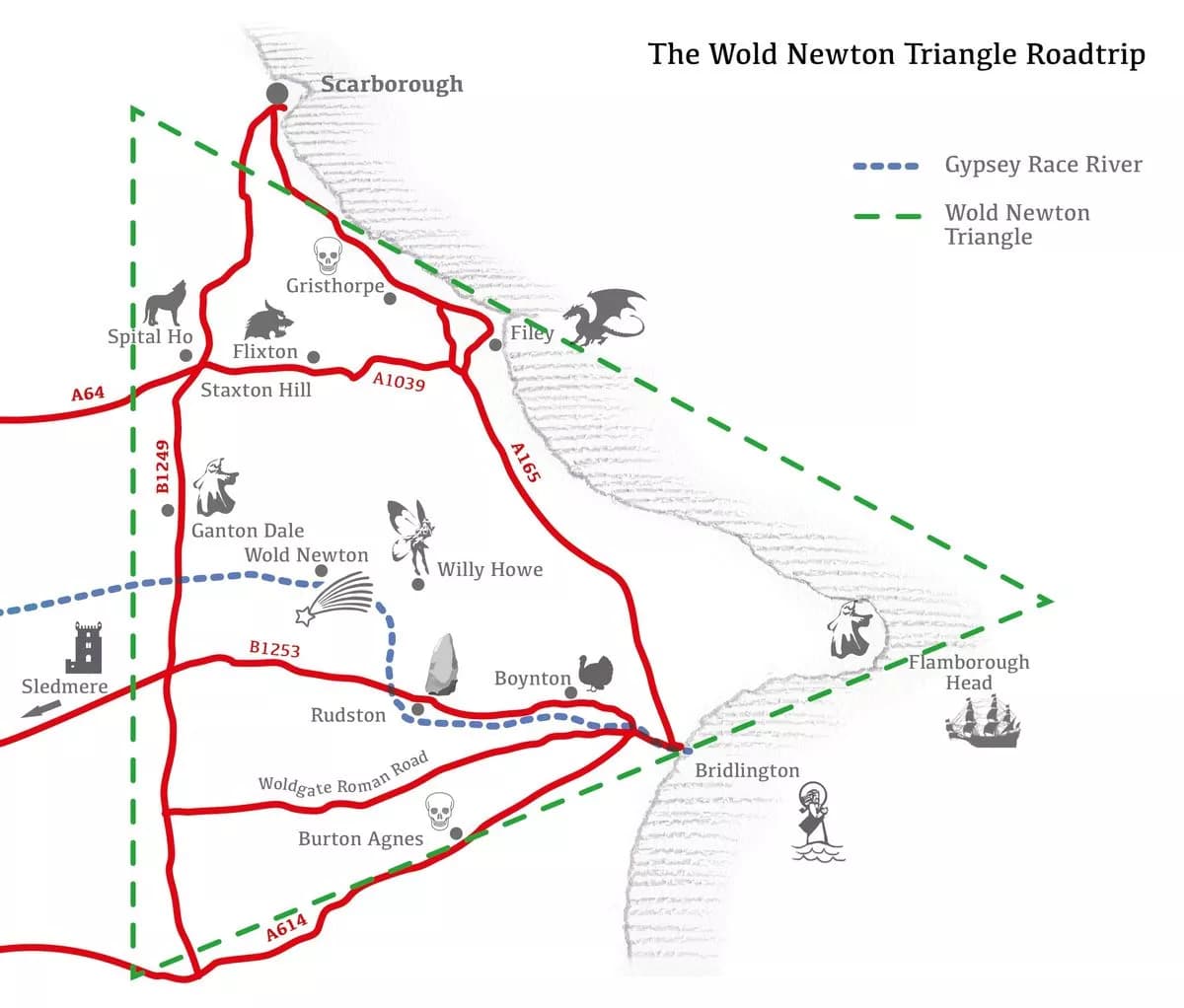
|Picture a sunny day out in the Wolds. Gentle rolling hills, pretty valleys... the last thing on anyone's mind would be monsters. But there's a patch of land in East Yorkshire, a kind of local Bermuda Triangle, that's absolutely packed with stories of werewolves, ghosts, and even dragons. It's known as the Wold Newton Triangle, and it has more myths and legends crammed into it than almost anywhere else in England. This isn't just one or two spooky tales; it's a whole catalogue of weirdness that makes you wonder what's really going on in this corner of the country.
A place plagued by werewolves
Out of all the stories, the ones about werewolves are the most common. Imagine being a lorry driver back in the 1960s, trundling along a remote road on a misty night. Suddenly, a pair of red eyes appears in the gloom, and moments later a massive, wolf-like creature tries to smash its way through the windscreen. It sounds like something from a film, but it's a real account from the Wold Newton Triangle.
Author Charles Christian, who wrote a book on the area's spooky tales, explained in 2015 why these stories might have started. "That part of the country was once infested with wolves," he said. "Up until the 18th century, there was still a wolf bounty for anyone killing them. It was known for the wolves to dig up corpses from graveyards. From that sprung the idea that they are supernatural beings, who took the form of werewolves. There is the legend of a werewolf called Old Stinker - a great hairy beast with red eyes, who was so called because he had bad breath."
The return of Old Stinker
The legend of Old Stinker even made a comeback in 2016. There was a reported sighting of a monster near Barmston Drain in Hull, which is a bit outside the triangle, but it shows the fear is still alive. A woman claimed she saw an 8ft tall beast holding a German Shepherd in its mouth. These fears are nothing new. Charles Christian mentioned, "When I was a child, I remember someone saying they would not drive along the road from Flixton to Bridlington after dark because of those fears. When people would glimpse what they thought was the rear lights of a car in front, it would instead reveal itself to be the red eyes of a wolf."
This problem goes way back. In AD 937, King Athelstan had a hostel built to protect travellers from wolf attacks. January was a particularly dangerous time, known as Wolf-monath, because hungry wolves would start targeting humans. "You were more likely to be eaten then than at any other time of year," Charles said. The wolves were said to be so clever that people began to believe they were humans who could transform at night.
The weird tale of the screaming skull
If werewolves aren't enough, how about a screaming skull? This story centres on Burton Agnes Hall, built between 1601 and 1610. Sir Henry Griffith's youngest daughter, Anne, absolutely loved the house. But during its construction, she was tragically attacked and, on her deathbed, made a very strange request: she wanted her head to be kept inside the hall forever. She warned her sisters that if they tried to remove it, she would cause a huge commotion.
Her sisters, thinking she was just delirious, buried her in the local churchyard. Almost immediately, strange noises, banging, and slamming doors started inside Burton Agnes Hall. Freaked out, they dug up Anne's body and brought her skull into the house. The disturbances stopped instantly. The legend of the screaming skull continued for centuries. A maid once threw the skull into a wagon, and the horses refused to move until it was returned. After many attempts to get rid of it, the owner in the early 19th century decided to brick it up within the walls, and nobody knows its exact location today.
The mystery of the monolith
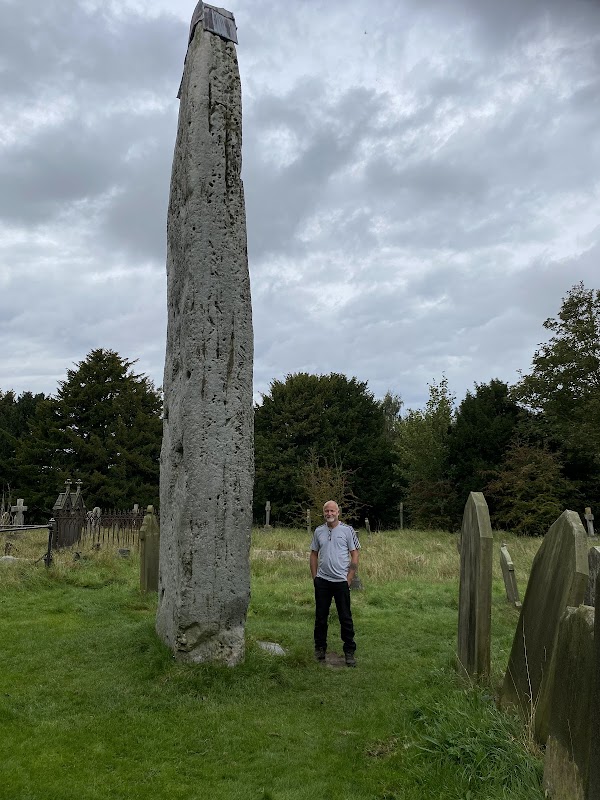
At the heart of the mystical triangle is the village of Rudston. This place is seriously old, with evidence suggesting it's been lived in for around 4,000 years, making it one of the longest continuously inhabited villages in all of England. The most famous feature here is the Rudston Monolith, a massive standing stone in the churchyard. Legend says the Devil himself threw the monolith at the church, but missed. For the ancient Beaker people, this was a major site of worship. People would dance around it wearing animal skulls. Charles Christian noted, "In its day, with everyone living in single-storey dwellings, it would have been like seeing the London Eye. It was a focal point in the way Stonehenge was, it was such an important ritual site."
Water of woe and the Gypsey Race
The landscape itself adds to the strange atmosphere. The Gypsey Race is a chalk stream that flows through the Wold Newton Triangle, passing the East Gate Bridge before emptying into the sea. Because it's a chalk stream, it can be an empty riverbed one day and a raging torrent the next after heavy rain.
The Ancient Britons had no idea about geology, so they saw it as a magical, and often worrying, sign. They called it the 'Waters of Woe'. A belief developed that the stream would flow right before a major disaster. "It flowed before the start of the English Civil War, before King Charles I lost his head, before the Great Fire of London and the First and Second World Wars," Charles explained. "Of course, it could be coincidence, but it is more fun to think there is a connection."
Mobbed by drunken fairies
It wouldn't be a proper collection of British folklore without some fairies. Near Burton Fleming is an ancient burial mound called Willy Howe, dated between 2,400 and 1,500BC. Though it's thought to be a tomb, no bodies were ever found. Instead, it's the setting for a tale about drunken fairies, written down by a monk named William of Newburgh in the 12th Century.
The story goes that a man heading home one night stumbled upon a party of fairies drinking at the Willy Howe burial mound. They offered him a drink, but he cheekily poured it out, stole their cup, and legged it with the angry fairies chasing him. That very cup was said to have been given to King Henry I, who ruled England from 1100 to 1135.
A cake-eating dragon in Filey
Just when you think it can't get any stranger, there's a story about a dragon. In the nearby town of Filey, a dragon was apparently terrorising the locals. Being clever Yorkshire folk, they came up with a plan. They baked an incredibly sticky cake called a parkin and tricked the dragon into eating it. The cake got stuck all over the dragon's teeth, forcing it to jump into the sea to wash its mouth out. While it was distracted, the villagers ambushed and drowned it. The rocky outcrop near the town, known as Filey Brigg, is said to be the fossilised bones of that very dragon.
So why is it so weird here? Meteorites and ley lines
What makes this small triangle in the east of England such a hotspot for the supernatural? Two main theories stand out. The first involves meteorites. In 1795, a huge meteorite-one of the largest to ever hit England-crashed into Wold Newton village. There's even a monument there to mark the spot. The 56lb piece of rock is now on display at the Natural History Museum in London. The other theory is all about ley lines, which are invisible lines of energy that supposedly connect ancient sites. While not scientifically proven, many believe in their power. And Rudston, with its monolith, is said to be the meeting point for five of these powerful ley lines, making it an incredibly magical and mystical location.

Yorkshire Team
The Yorkshire.com editorial team is made up of local writers, content creators, and tourism specialists who are passionate about showcasing the very best of God’s Own Country. With deep roots in Yorkshire’s communities, culture, food scene, landscapes, and visitor economy, the team works closely with local businesses, venues, and organisations to bring readers the latest news, events, travel inspiration, and insider guides from across the region. From hidden gems to headline festivals, Yorkshire.com is dedicated to celebrating everything that makes Yorkshire such a special place to live, work, and visit.
View all articles →