Yorkshire Team
Published on April 24th, 2026
•Ever walked past a building site and wondered what goes into making those massive structures? A huge part of it is steel. And it looks like the cost of that very steel is about to get a lot more expensive here in the UK. So expensive, in fact, that new research suggests the UK is on track to become the priciest place in all of Europe to buy it.
This isn't just a small bump in costs; it’s a massive shift that could affect everything from new skyscrapers to home extensions. New research published on 23 April 2026 by the Yorkshire-based steelwork manufacturer, Tadweld, has put a spotlight on some big changes happening in the steel market that are causing quite a stir.
What’s actually going on with steel prices?
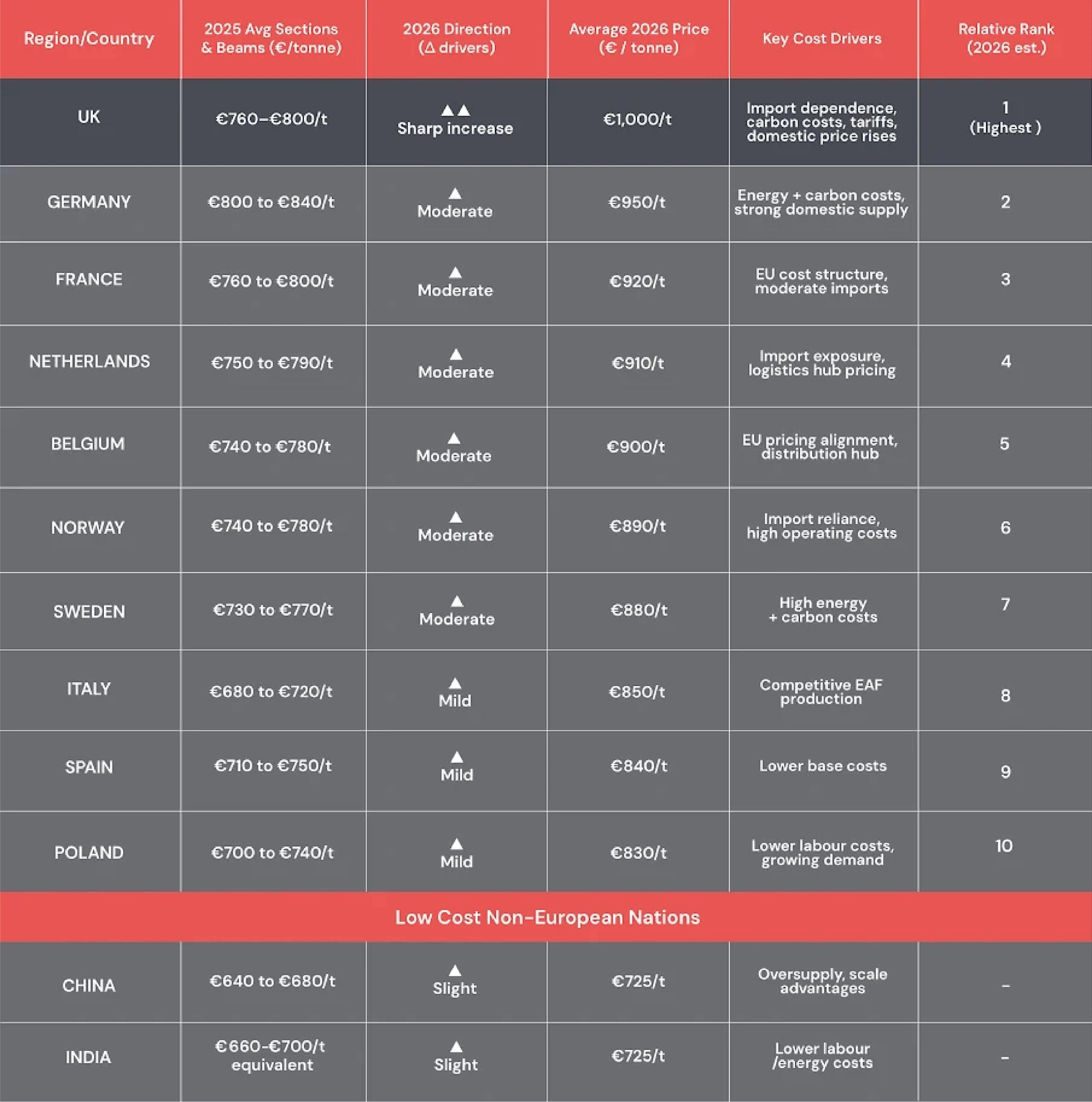
Right now, things are looking pretty serious. Projections show that the UK is set to leapfrog major players in Europe like Germany and France when it comes to steel pricing. Think about it like a race no one wants to win. While prices in those countries hover around €850 to €900 per tonne, the UK is heading for a different league entirely. The research shows that the price for hot-rolled structural steel is expected to climb from around €780 per tonne to over €1,000 per tonne by late 2026. That's a huge jump and it pushes the UK significantly ahead of its competitors. The reason for these rocketing steel prices isn’t just one thing, but a new government policy is at the centre of it all. It’s making the entire market for steel very unpredictable.
The new rules causing the stir
So, what’s this new policy all about? Back in March 2026, the UK government announced a new trade policy for steel, and it's set to have a massive impact. The first big change lands on 1st July 2026. From this date, the amount of steel that can be brought into the country will be slashed. This limit is called a quota, and it’s being reduced by a whopping 60%. But that’s not all. Any steel that comes into the UK above this new, smaller quota will be hit with a massive 50% tax, known as a tariff. It’s like saying a supermarket can only import 100 boxes of its most popular cereal, and any box after that will have its price jacked up by half. The costs for this import of raw material are bound to go up.
And there’s more. On 1st January 2027, another layer of costs gets added. A new tax called the Carbon Border Adjustment Mechanism, or CBAM, will kick in. In simple terms, this is a tax on the carbon emissions created during the manufacturing process of imported goods. This is the government's new carbon pricing system. All these new rules are piling on top of already high global energy and transport costs, making an already tough situation even harder for businesses that rely on structural steel. The whole situation is making the UK a very expensive place for this kind of work.
A view from the factory floor
For businesses on the ground, this is a huge deal. Chris Houston, the Managing Director at Tadweld, a specialist steelwork firm based in Yorkshire, has voiced serious concerns. He points out that while everyone in the manufacturing sector wants to support domestic steel production, this new policy might be going about it the wrong way. Instead of tackling the real issue – that UK steel producers face some of the highest energy costs in Europe – it just passes the pressure on. The burden falls on the businesses that buy the steel, like construction firms and steel fabrication businesses.
Chris Houston says, “In general, the entire manufacturing sector is supportive of helping UK domestic steel to be competitive, but instead of addressing the uneven playing field UK steel producers face - by having the highest energy costs in Europe - this new quota and tariff-led approach shifts the pressure downstream to the consumers of steel including construction and steel fabrication businesses. As a result, the UK is moving towards the highest steel prices in Europe, making it increasingly difficult for UK fabricators to compete internationally.”
This is a major problem for the fabrication industry. The new pricing structure could make it incredibly difficult for companies in the UK to offer competitive prices compared to their European counterparts, affecting the whole market for steel fabrication.
So, is this policy helping anyone?
The idea behind the government’s policy is to protect and support domestic steel production. The goal is to make UK-made steel more competitive. But according to Chris Houston, the reality could be very different. The policy seems to benefit a very small number of UK producers, while creating huge cost pressures for over 1,200 steel fabrication businesses that depend on a steady and affordable supply of steel for their work.
He added: “This policy is framed as support for UK steel production, but in reality it benefits a small number of domestic producers while adding significant cost pressures across more than 1,200 steel fabrication businesses and the wider construction sector, which relies on steel every day. There is little value in a competitive UK steel production base if the final consumer is priced out of the market. Given that there are several steel grades and products that have no UK domestic manufacturing at all currently, I’m not sure this policy does anything except raise prices on those products.”
That last point is a big one. If certain types of steel aren't even made in the UK, a tariff on importing them doesn't help any domestic producer. It just makes an essential material more expensive for everyone, from the fabrication team to the final customer buying a new home.
What happens next?
There are still a few question marks hanging over this new policy. For example, there's talk of a 'transitional arrangement'. This could mean that some steel, for contracts that were agreed before 14 March 2026, might be exempt from the new rules for a short period between July and September 2026. There’s also concern in the industry about a potential loophole. Some worry that if steel is slightly processed before it’s imported – a process called 'pre-fabrication' – it might not be covered by the new tariff. It's a bit of a grey area that people are watching closely. What is clear, however, is that big changes are coming for the UK steel market. The rising costs of structural steel are set to have a ripple effect, and businesses in Yorkshire and across the country, like Tadweld, are getting ready for a challenging road ahead. The future of steel prices will certainly be one to watch.
Images for this article (hosted on S3):
Featured Image: https://copiq-2026.s3.eu-west-2.amazonaws.com/smart-images/c2d6e95f-9326-4282-b43b-1764f4270778.jpg

Yorkshire Team
The Yorkshire.com editorial team is made up of local writers, content creators, and tourism specialists who are passionate about showcasing the very best of God’s Own Country. With deep roots in Yorkshire’s communities, culture, food scene, landscapes, and visitor economy, the team works closely with local businesses, venues, and organisations to bring readers the latest news, events, travel inspiration, and insider guides from across the region. From hidden gems to headline festivals, Yorkshire.com is dedicated to celebrating everything that makes Yorkshire such a special place to live, work, and visit.
View all articles →