
Welcome to Yorkshire
Published on May 21st, 2026
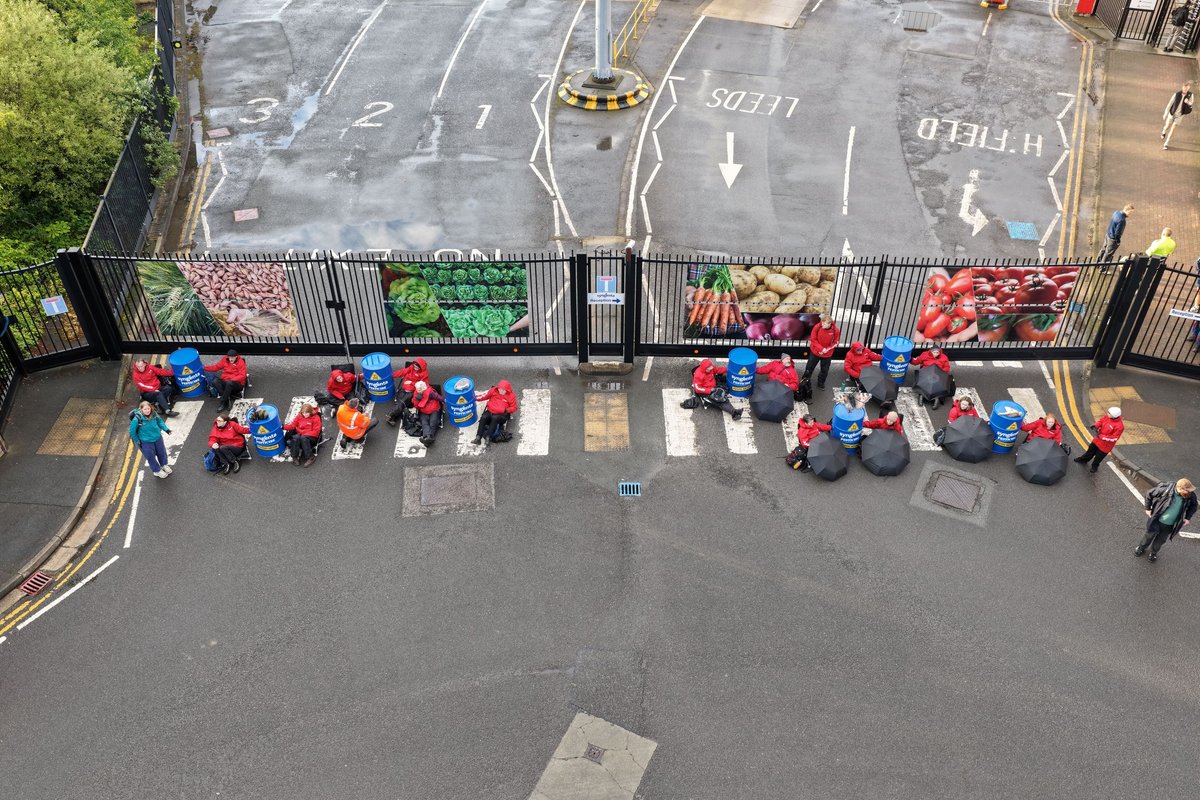
•On World Bee Day, 30 activists from Greenpeace gathered outside the UK headquarters of Syngenta, a major pesticide company based in Huddersfield, Yorkshire. Their aim was to raise awareness about the dangers of a specific pesticide, lambda-cyhalothrin, which is linked to the decline of bee populations and other wildlife. This protest highlights concerns over how pesticides impact the environment and food security.
Activists Take Action
The activists transformed a roundabout outside Syngenta's headquarters into a striking hazard symbol, clearly displaying the message “Syngenta poisons nature.” This bold statement was complemented by ultra-realistic sculptures of wildlife that are affected by pesticides, including a bee, butterfly, bird, fish, frog, and hedgehog. These sculptures were placed atop blue barrels that symbolised the hazardous chemicals produced by the company. The protestors locked themselves to fifteen barrels, effectively blocking all three gates of the facility. This action prevented vehicles from entering or leaving the site, drawing attention to the issue at hand. The activists' efforts were aimed at highlighting the severe consequences of pesticide use on the environment and wildlife.
The Impact of Lambda-Cyhalothrin
Lambda-cyhalothrin, the pesticide at the centre of the protest, is widely used in UK farming. It is classified as a Highly Hazardous Pesticide due to its extreme toxicity to bees and aquatic life. This chemical is also known as a "forever chemical" because it does not break down easily in the environment, leading to long-term contamination of soil and water. Recent analysis from Greenpeace revealed alarming statistics about this pesticide:
Just one teaspoon of lambda-cyhalothrin can kill 13 million bees.
In 2024, 6.9 tonnes of this pesticide were applied to over 1 million hectares of British arable crops, an area larger than six times the size of London.
Of the 41 products authorised for use in the UK that contain lambda-cyhalothrin, eight are sold by Syngenta, making them the only one of the major agrochemical companies permitted to market it in the UK.
These figures underline the potential devastation this pesticide can cause to bee populations, which are vital for pollinating the crops that humans and wildlife depend on.
Broader Concerns for Wildlife and Food Security
The environmental impact of lambda-cyhalothrin extends beyond just bees. The use of such insecticides can disrupt entire ecosystems, harming birds, mammals, and aquatic life by eliminating their food sources. The reliance on pesticides like these not only threatens wildlife but also raises concerns about the future of food security in the UK.
Nina Schrank, a Greenpeace UK campaigner, expressed the urgency of the situation:
“Our countryside and the wildlife we love is being poisoned by pesticides made and sold by Syngenta. Pesticide damage doesn’t stop at the edge of a field. These chemicals are wiping out insects, polluting rivers, and causing the very foundations of our food system to crumble.”
Call for Change
Greenpeace is advocating for significant changes in how pesticides are used in the UK. Their demands include:
A 50% reduction in pesticide and fertiliser use by 2030.
An 80% reduction by 2040.
Increased funding and support for farmers to lessen their reliance on chemical inputs.
Tighter restrictions on pesticide use in public spaces and homes.
These proposals aim to create a more sustainable agricultural system that protects wildlife and ensures food security for future generations.
Yorkshire Team
The Yorkshire.com editorial team is made up of local writers, content creators, and tourism specialists who are passionate about showcasing the very best of God’s Own Country. With deep roots in Yorkshire’s communities, culture, food scene, landscapes, and visitor economy, the team works closely with local businesses, venues, and organisations to bring readers the latest news, events, travel inspiration, and insider guides from across the region. From hidden gems to headline festivals, Yorkshire.com is dedicated to celebrating everything that makes Yorkshire such a special place to live, work, and visit.
View all articles →